
Species Guides
Tropical vs Temperate Springtails — Which Do You Need?
Apr
Table of Contents
Tropical vs Temperate Springtails — Which One Does Your Vivarium Actually Need?
Published by Springtails Culture · New Baden, Illinois
It is probably the most common buying question in the springtail hobby: tropical or temperate? And if you’ve tried to find a clear, definitive answer online, you’ve likely run into a wall of contradictory advice, vague generalisations, and a surprising amount of “it probably doesn’t matter either way” from experienced keepers who have stopped thinking carefully about the question.
This guide is the definitive answer. We’re going to explain what the tropical/temperate distinction actually means, what the real difference in performance is, which one your specific setup needs, and when using both together makes sense. By the end, you’ll never have to guess again.
The Question Everyone Gets Wrong
Most beginners assume the choice is simple: tropical vivarium = tropical springtails, temperate vivarium = temperate springtails. Logical, intuitive — and only partially correct.
The reality is more nuanced. Tropical springtails prefer warmer environments, with temperate doing better on the cooler front — but temperate will still do absolutely fine in tropical conditions. This means the choice is not simply about matching habitat names. It’s about understanding performance at specific temperatures and what your enclosure actually needs.
Getting this wrong has real consequences. The most common mistake is using a cool-climate temperate species in a warm tropical vivarium where it underperforms — not dramatically enough to cause obvious failure, but enough to reduce mold control effectiveness and slow colony establishment at the worst possible time.
What “Tropical” and “Temperate” Actually Mean
First, a clarification that most guides skip entirely.
The weird thing is, the tropical/temperate designation is seemingly a bit of a mess. You’d think it refers specifically to their natural affinity for the named environment — but it’s not that simple. In the hobby, these labels are used to describe thermal performance in culture conditions — not necessarily the natural origin of the species.
Here’s what the labels actually mean in practice:
Tropical springtails: Species that reproduce faster, stay more active, and perform better at warm temperatures (22–28°C / 72–82°F). They are generally more humidity-dependent and less tolerant of temperature fluctuations and drying out.
Temperate springtails: Species with broader thermal tolerance that perform well across a wider temperature range (15–22°C / 59–72°F) and are generally more forgiving of brief drying periods and temperature fluctuations.
The most important distinction is not about where they come from — it’s about where they perform best. And that’s entirely about temperature.
The Real Difference — Temperature Performance
This is the core of the tropical vs temperate question, and it’s where most guides fail to be specific enough.
Tropical and temperate springtail species differ in several ways, including care requirements, reproductive rates, size, eating habits, longevity, and ease of care — but understanding their functionality and reproduction rates is very important for long-term success.
Here’s how temperature affects each group:
Tropical Species at Warm Temperatures (22–28°C)
- Reproduction: Rapid — colonies establish quickly and reach functional density within 2–4 weeks
- Activity: High — continuously active across substrate surface and litter layer
- Mold control: Maximum effectiveness — feeding rate and population growth match the elevated mold pressure of a warm, humid setup
- Humidity dependence: High — complete dry-outs cause rapid colony collapse
Tropical Species at Cool Temperatures (below 18°C)
- Reproduction: Significantly slowed — colony establishment takes much longer
- Activity: Reduced — less effective at keeping pace with organic buildup
- Mold control: Compromised — colony can’t reproduce fast enough to compensate for slower individual feeding rates
Temperate Species at Cool Temperatures (15–20°C)
- Reproduction: Optimal — designed to perform at these temperatures
- Activity: Full — reliably active across the full temperate temperature range
- Mold control: Maximum effectiveness for cool setups
- Resilience: Higher — temperate springtails are easier to care for due to their ability to tolerate a wider range of conditions and can tolerate brief periods of dryness better than tropical species
Temperate Species at Warm Temperatures (22–28°C)
- Reproduction: Continues but at a modified rate — not optimised for warmth
- Activity: Maintained but not peak performance
- Mold control: Functional but below what a purpose-selected tropical species achieves in the same conditions
The practical takeaway: both groups will function in both temperature ranges — but each group peaks in its own range.
Head to Head Comparison Table
| Feature | Tropical Springtails | Temperate Springtails |
|---|---|---|
| Optimal temperature | 22–28°C (72–82°F) | 15–22°C (59–72°F) |
| Reproduction rate at optimal temp | Very fast | Fast |
| Performance at cool temps | Reduced | Full |
| Performance at warm temps | Full | Good |
| Humidity dependence | High — crash on dry-out | Moderate — tolerates brief drying |
| Temperature fluctuation tolerance | Low | High |
| Typical body form | Varies — often plumper, smaller | Varies — often longer and thinner |
| Ease of care | Moderate | Beginner-friendly |
| Species variety available | Wide | Wide |
| Best for | Tropical & dart frog vivariums | Temperate, woodland & mixed setups |
Tropical Springtails — Full Breakdown
What They Are
Tropical springtails are species optimised for the warm, humid, consistently moist conditions of tropical ecosystems. Tropical species tend to be larger in size, often ranging between 1–4 millimetres, and come in an array of colours. They require consistent warmth and high humidity — regular misting and maintaining moisture levels are crucial. Complete dry-outs will cause an entire colony crash.
When to Choose Tropical Species
- Your vivarium runs consistently at 22°C or above
- You’re keeping dart frogs, tropical geckos, tropical reptiles, or warm-climate amphibians
- Your setup is a sealed or near-sealed tropical build with consistent high humidity
- You’re in a warm climate or keep your home warm year-round
- You want the fastest possible colony establishment and maximum mold control at tropical temperatures
The Best Tropical Springtail Species
Tropical White Springtails — Collembola sp. — From $15.00 The tropical equivalent of Folsomia candida. Pure white, substrate-active, fast-reproducing at tropical temperatures. The most accessible tropical entry point and the best first tropical culture for any keeper. Wide tolerance within tropical conditions.
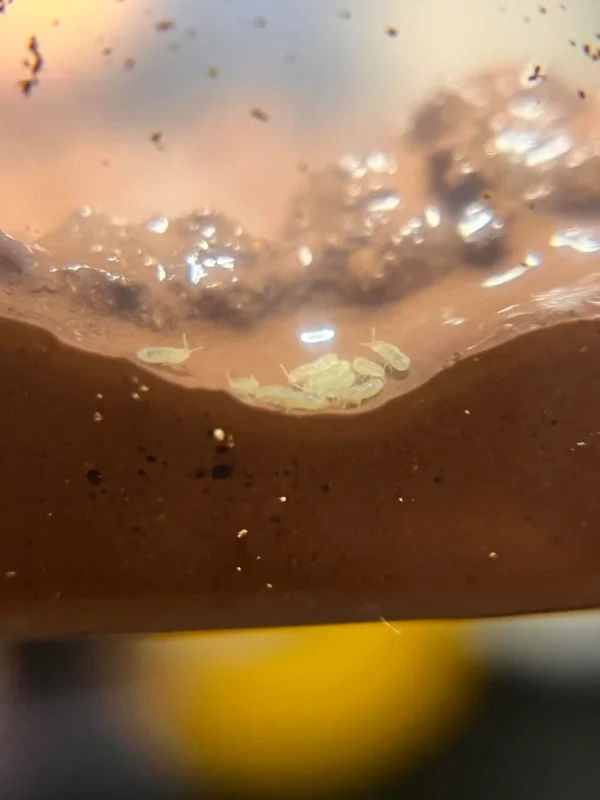
Tropical Pink Large Form — Coecobrya tenebricosa — From $25.00 Noticeably larger than standard white or pink species. Excellent dual feeder and cleanup crew for dart frog vivariums — the larger body makes it appropriate prey for adult frogs as well as juveniles. Active surface dweller.
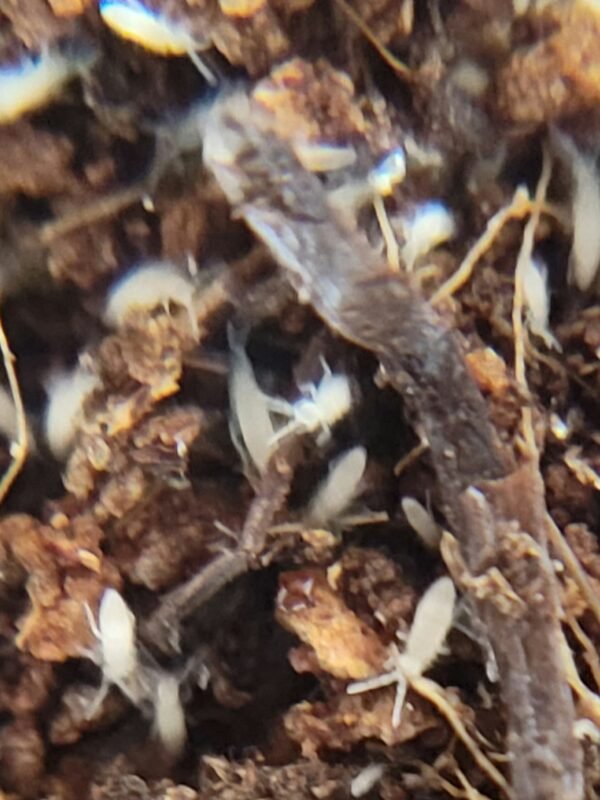
Pink Springtails — Sinella curviseta / Coecobrya communis — From $25.00 Light pink, prolific, and wide-tolerance. Works across tropical and warmer temperate setups. One of the most versatile species in the range — an excellent choice for planted vivariums at any temperature in the upper temperate to tropical range.

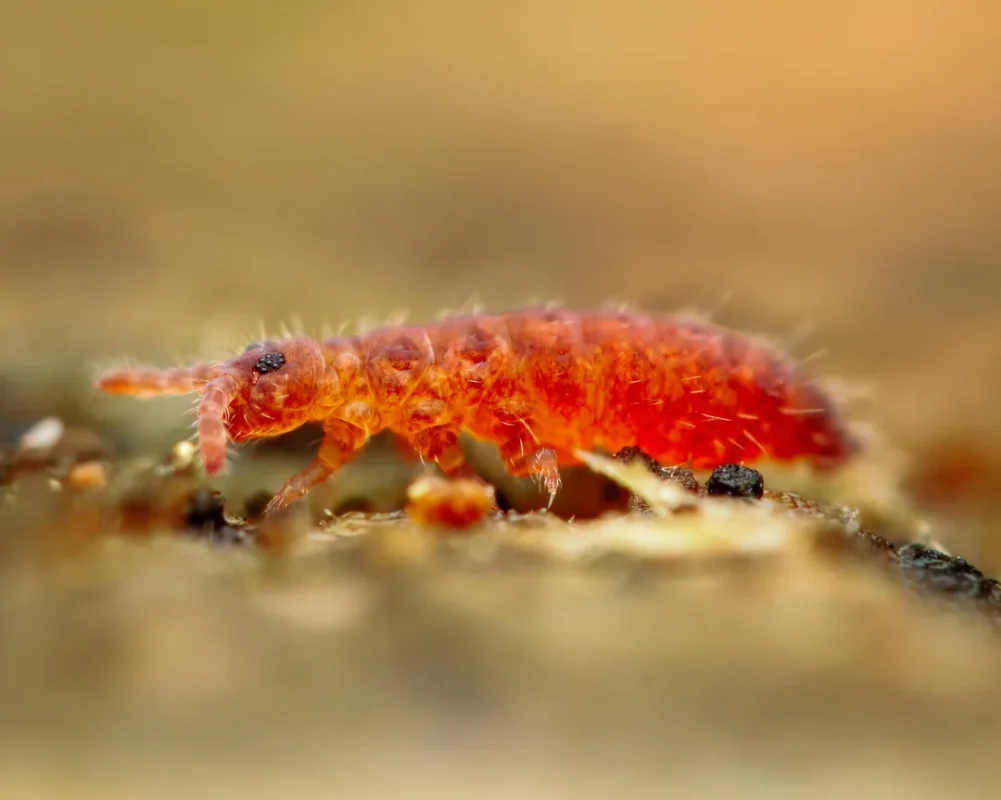
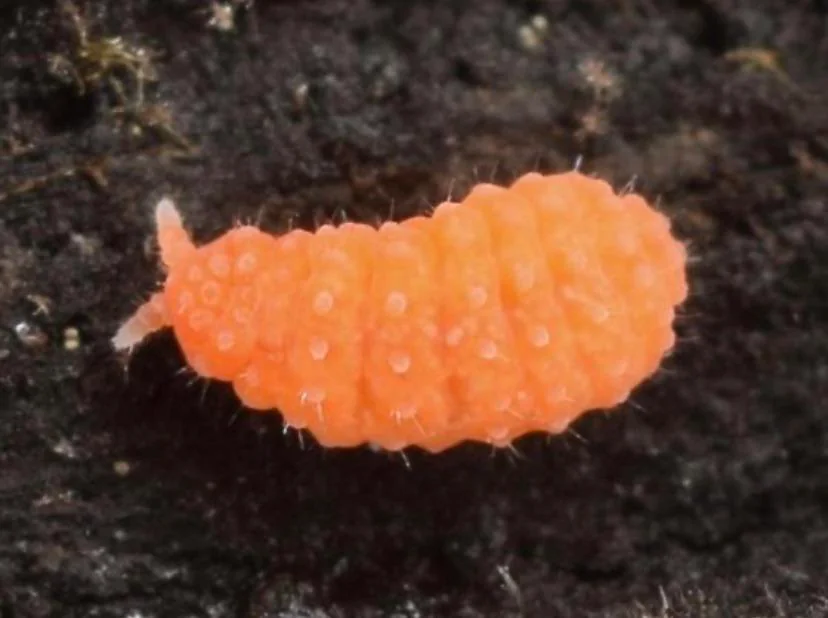
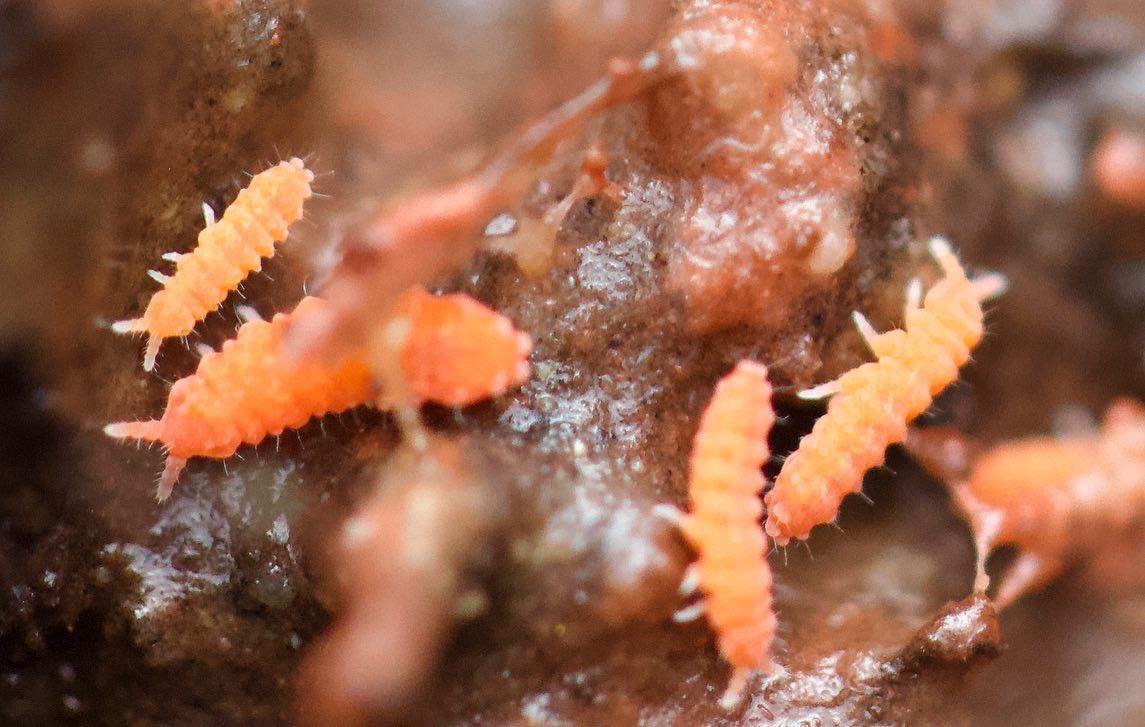
Florida Orange Springtails — Neanura growae — From $16.00 Warm orange, slow-moving, non-jumping. Native US species that prefers tropical humidity. Genuinely visible in the vivarium — one of the most watchable species in the range. Excellent feeder for dart frogs.
Tropical Springtail Care in Brief
- Maintain 22–28°C consistently — use a heat mat or heating cable if your room runs cool
- Keep substrate consistently damp — never allow to fully dry out
- Feed small amounts of brewer’s yeast or fish flakes weekly
- Use a secure-lidded container — tropical species are generally more active escapers
Temperate Springtails — Full Breakdown
What They Are
Temperate springtails are species optimised for cooler, more variable conditions. They are generally more forgiving of fluctuations in temperature and humidity — making them the more beginner-friendly group overall and the more appropriate choice for setups that run cool or experience variable conditions.
The most important temperate species is also the most important springtail in the entire hobby.
The Undisputed Champion — Folsomia candida
Folsomia candida — the Temperate White Springtail — is the single most widely used and most scientifically documented springtail species on Earth. It is the ISO-standardised model organism in soil biology research. Its genome has been fully sequenced. It has been cultured continuously in laboratories for over 40 years.
Folsomia candida are the gold standard springtails. They’re hardy and will make light work of any terrarium mold. They reproduce parthenogenetically — every individual is female and capable of producing eggs without mating — which means colony establishment from even a small founding population is remarkably fast and reliable.
For keepers who have never added springtails to a vivarium before, Folsomia candida is the single safest, most reliable first choice. It works. Consistently.
When to Choose Temperate Species
- Your vivarium runs below 22°C consistently
- You’re building a woodland, moss, or cool-climate terrarium
- You’re keeping temperate reptiles (salamanders, newts, cool-climate frogs)
- You’re a beginner who wants the most forgiving, widest-tolerance option
- Your room temperature fluctuates and you need a species that handles variability
The Best Temperate Springtail Species
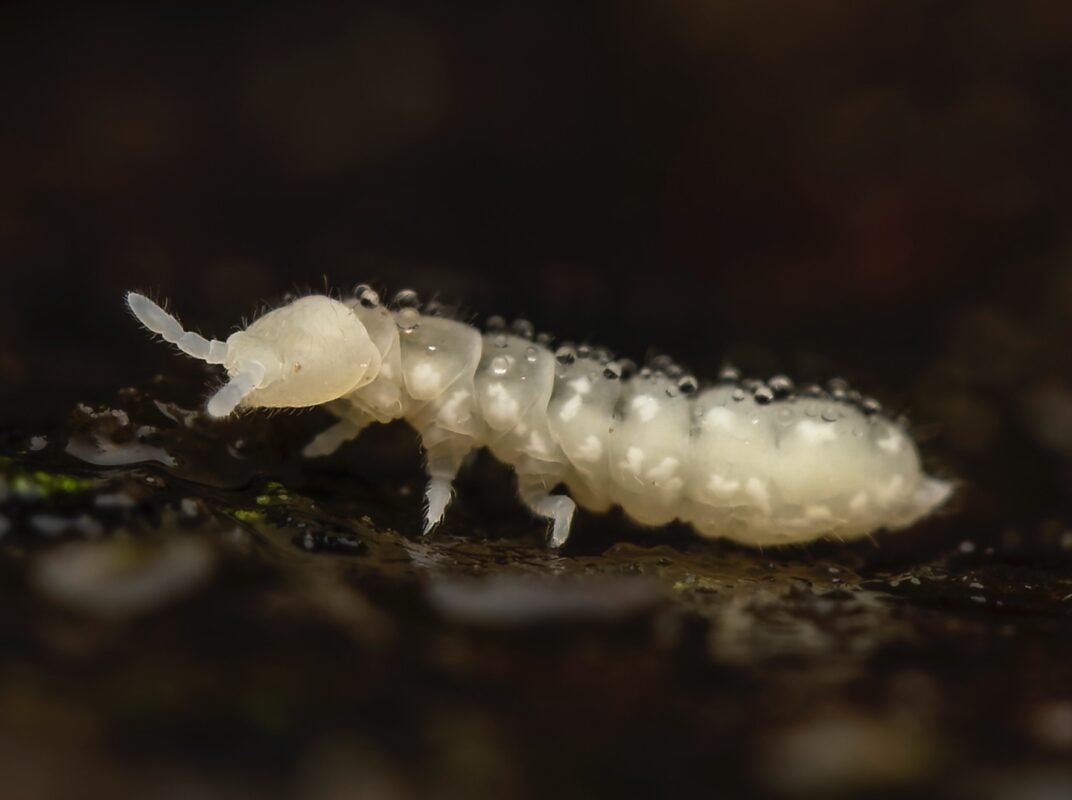
Folsomia candida White Springtails — From $20.00 The definitive temperate springtail. Beginner-friendly, widely documented, reliable in every cool to moderate setup. The foundation of every temperate cleanup crew. Start here if you’re new to springtails.
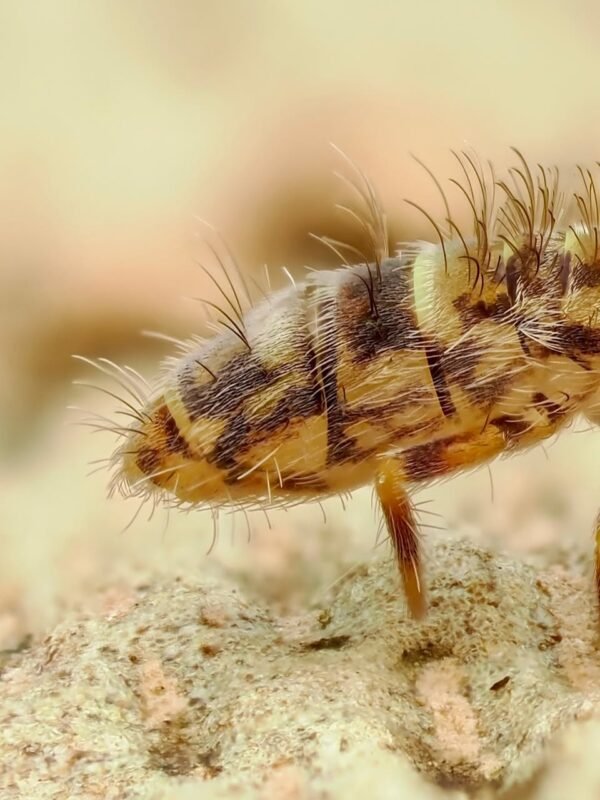
Orchesella cincta Banded Springtails — From $30.00 4–6mm, bold dark banding on cream. Named “belted” by Linnaeus in 1758. One of the most visually striking temperate species available — large enough to see without magnification and genuinely beautiful in a display build. Orchesella cincta is notable for its vibrant coloration and distinctive white stripes — they thrive in slightly cooler temperatures and are often used in vivariums with a more temperate climate.
Isotoma viridis Green Springtails — From $30.00 Bright vivid green — the only vivid green springtail culture in the hobby. Found naturally in moist, moss-rich habitats including on snow surfaces during cold periods. The definitive species for moss terrariums and cool planted builds.
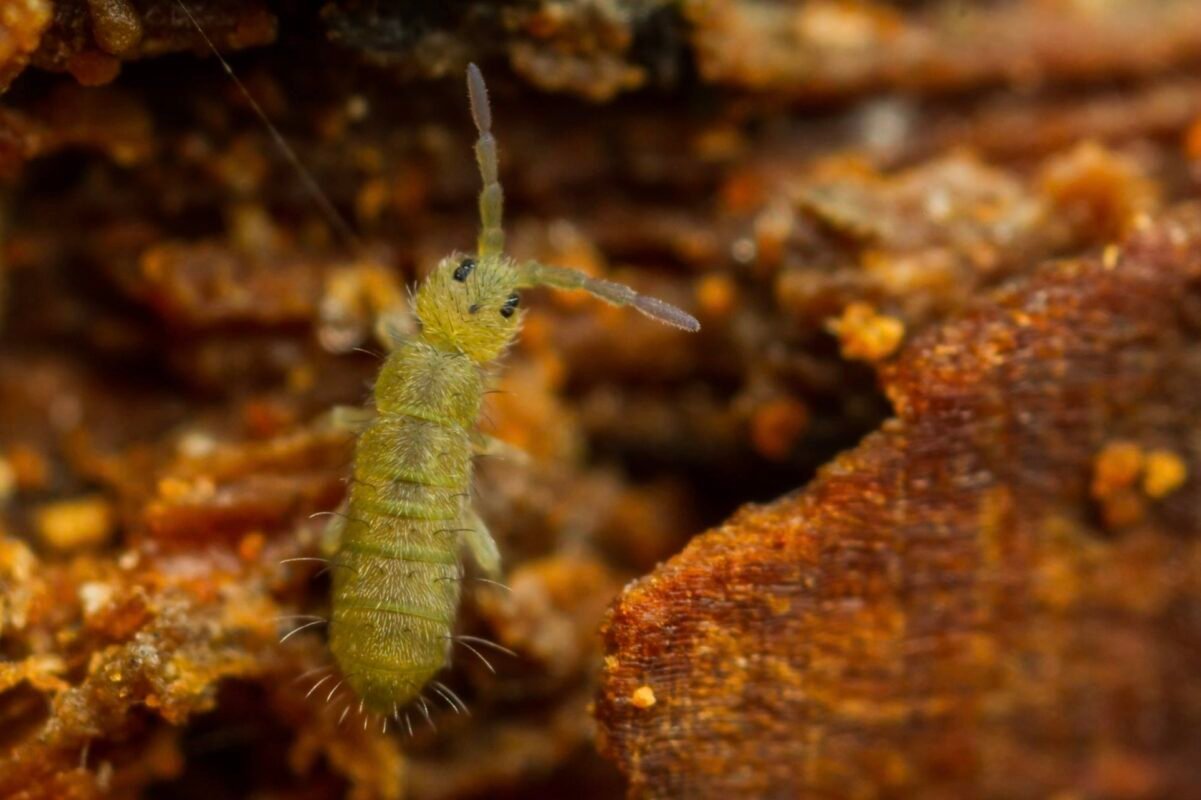
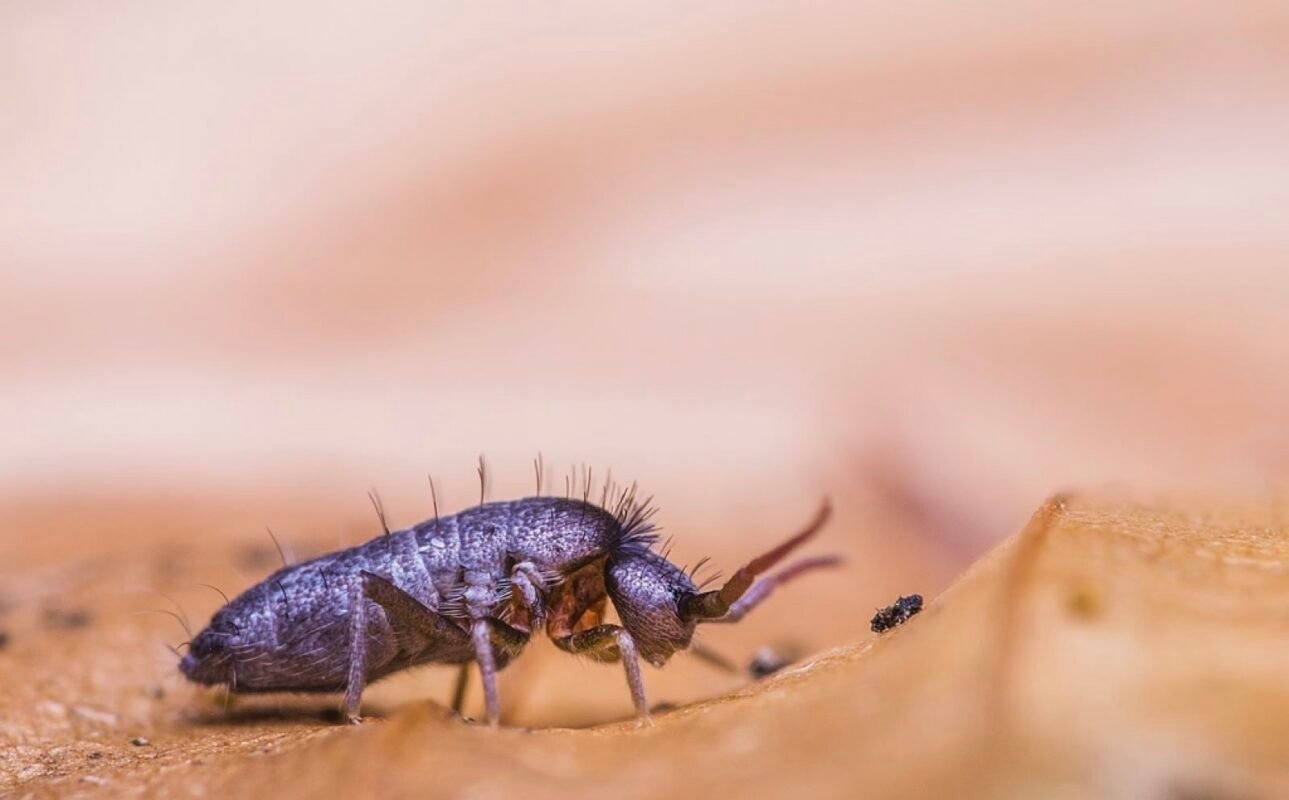
Tomocerus minor Large Temperate Springtails — From $35.00 Up to 4.5mm with metallic silvery-blue iridescence. A genuine leaf litter processor — scientifically documented to enhance decomposition at a measurable level. The most visually impressive temperate springtail in the range.
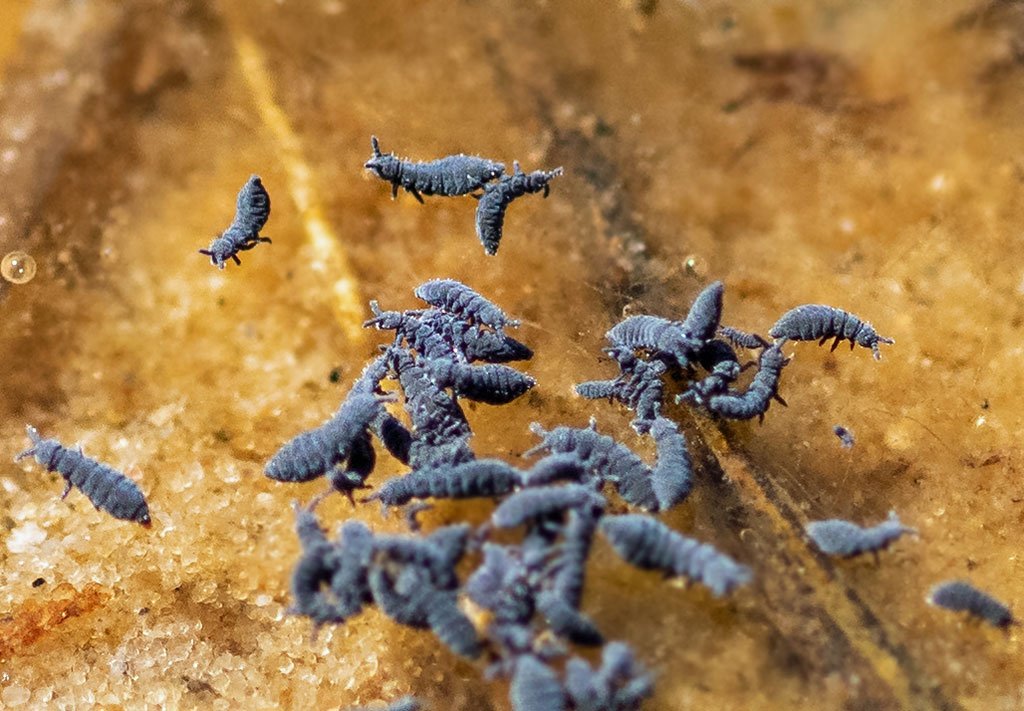
Hypogastrura vernalis Spring Springtails — From $35.00 Dark blue, cold-adapted specialist. Active on snow surfaces in nature. The definitive species for compost terrariums, cold woodland builds, and cool setups operating below 18°C where all other species underperform.
Temperate Springtail Care in Brief
- Works well at 15–22°C — no additional heating needed in most UK/Northern European rooms or air-conditioned spaces
- More tolerant of brief humidity drops than tropical species
- Feed lightly with brewer’s yeast or fish flakes weekly
- Can tolerate short periods of reduced moisture without crashing
Which One Does Your Vivarium Need?
Use this decision guide to make the right choice in 30 seconds:
Choose Tropical Springtails if:
✅ Your vivarium runs at 22°C or above consistently ✅ You’re keeping dart frogs or warm-climate amphibians ✅ You’re building a sealed tropical vivarium with high, stable humidity ✅ You want maximum mold control in warm conditions ✅ You want coloured species — pink, orange, lilac, yellow options are all tropical
Start with: Tropical White Springtails or Pink Springtails
Choose Temperate Springtails if:
✅ Your vivarium runs below 22°C ✅ You’re building a woodland, moss, or cool-climate terrarium ✅ You’re keeping temperate reptiles or amphibians ✅ You’re a beginner who wants the most forgiving option ✅ Your environment has variable temperatures or humidity
Start with: Folsomia candida White Springtails
If You’re Still Not Sure:
Choose Folsomia candida. It works across a wider temperature range than any other commonly available species. If your setup turns out to be running warm, add a tropical species alongside it later. You will not go wrong starting with Folsomia candida.
Can You Use Both Together?
Yes — and for certain setups, using both is actively beneficial.
A surprising number of experienced keepers recommend using both the white tropical and white temperate together. The ecological reasoning is sound: the two species occupy slightly different microhabitat niches within the substrate, and their complementary temperature tolerances mean the combined colony performs well across a wider range of enclosure conditions.
A practical two-species combination that works well:
- Folsomia candida × 50 (deep soil, wide thermal tolerance) + Tropical White × 50 (surface active, warm-optimised) = complete substrate coverage from 100 total springtails
This combination is particularly effective for vivariums that run at the overlap zone — 20–24°C — where either species alone would be functional but the combination provides peak performance across the full temperature range.
One note of caution: The pink tends to out-compete everything, apparently — if you’re mixing species, use pink (Sinella curviseta / Coecobrya) as one of the two species only if you’re comfortable with it becoming the dominant colony over time. For a balanced two-species mix, white temperate + white tropical is the most stable combination.
Beyond Tropical and Temperate — The Wider Species Range
The tropical/temperate binary is a useful starting framework — but it’s a simplification of a much richer spectrum of springtail species, each optimised for a specific set of conditions.
At Springtails Culture, we carry species that go well beyond this binary:
For moss terrariums: Isotoma viridis — cool, moist, vivid green For compost/cold setups: Hypogastrura vernalis — the cold specialist For display builds: Orchesella cincta — large, boldly patterned, visible For collector setups:Tomocerus minor — giant, iridescent, leaf litter processor
Choosing the right species for your specific setup — not just the right broad category — is what separates a vivarium that functions adequately from one that thrives.
If your vivarium features live tropical plants — aroids, ferns, bromeliads, mosses — the species you choose affects plant health as much as mold control. Springtails’ nutrient cycling activity directly supports root health and soil microbial balance. For premium tropical plants to build your vivarium around, visit Variegated Plant Shop — their selection pairs well with the warm, humid conditions tropical springtail species require.
The Decision Framework — A Simple Guide
Still unsure? Work through this simple framework:
Step 1 — What temperature does your vivarium run at?
- Below 18°C → Temperate only (Folsomia candida + Hypogastrura vernalis)
- 18–22°C → Temperate preferred (Folsomia candida or Orchesella cincta)
- 22–26°C → Either works — tropical recommended (Tropical White or Pink Springtails)
- Above 26°C → Tropical only (Tropical White + Tropical Pink Large Form)
Step 2 — What animals are you keeping?
- Dart frogs → Tropical species (feeder function + mold control at warm temps)
- Temperate salamanders/newts → Temperate species
- Tropical reptiles → Tropical species
- No animals — planted only → Match to your vivarium temperature
Step 3 — How experienced are you?
- First time → Folsomia candida — the safest, most forgiving choice regardless of temperature
- Some experience → Choose based on temperature as above
- Experienced → Build a multi-species crew using both groups for complete coverage
Browse all species and choose your match at Springtails Culture →
FAQ — Tropical vs Temperate Springtails
Q: Can I use tropical springtails in a temperate vivarium? A: Yes — they will function, but at reduced effectiveness compared to a temperature-matched temperate species. If your vivarium runs below 20°C consistently, a purpose-selected temperate species will outperform a tropical one.
Q: Can I use temperate springtails in a tropical vivarium? A: Yes — Folsomia candida in particular works across a surprisingly wide temperature range including tropical conditions. However, at warm temperatures a tropical species will reproduce faster, establish sooner, and provide better mold control. For optimal performance in a tropical build, use a tropical species.
Q: What temperature is the dividing line between tropical and temperate springtails? A: 22°C (72°F) is the practical dividing line. Below 22°C, temperate species perform better. Above 22°C, tropical species perform better. In the 20–24°C overlap zone, either will work and a two-species combination of both is optimal.
Q: Is Folsomia candida a tropical or temperate springtail? A: Folsomia candida is a temperate species — it is optimised for 15–22°C and is the gold standard temperate springtail. At tropical temperatures it continues to function but is outperformed by purpose-selected tropical species. It’s the most widely used springtail in the hobby precisely because its temperature range overlaps significantly with tropical conditions.
Q: Do tropical springtails come in more colours than temperate ones? A: Generally yes — tropical species often come in an array of colours including white, pink, orange, lilac, yellow, and red. Most of our coloured species — Tropical Lilac, Tropical Yellow, Florida Orange, Pink Large Form — are tropical. Most temperate species are white, grey, or naturally patterned (like the banded Orchesella cincta or metallic Tomocerus minor).
Q: Which springtails are best for dart frogs? A: Tropical species — dart frog vivariums run warm and humid, which is exactly where tropical springtails peak in performance. The best combination for dart frogs is Tropical White (Collembola sp.) for population density and colony size, plus Tropical Pink Large Form (Coecobrya tenebricosa) for feeder size appropriate for adult frogs.
Q: Can tropical and temperate springtails coexist in the same vivarium? A: Yes — they occupy slightly different microhabitat niches and coexist well. A white temperate + white tropical combination is one of the most recommended two-species setups in the hobby. Avoid adding pink (Sinella/Coecobrya) alongside other species if you want a balanced mix — it tends to outcompete other species over time.
Q: What happens if I use the wrong type for my vivarium? A: You won’t cause catastrophic failure — but you may see slower colony establishment, reduced mold control effectiveness, and a colony that never reaches the density it would with the right species. The most common consequence is a mold problem in the first 4–6 weeks while the colony struggles to establish at a suboptimal temperature.
Summary — The Quick Answer
| Your Setup | Recommended Species |
|---|---|
| Tropical vivarium (22°C+) | Tropical White + Tropical Pink LF |
| Dart frog vivarium | Tropical White + Florida Orange |
| Mixed/overlap zone (20–24°C) | Folsomia candida + Tropical White |
| Temperate woodland (15–20°C) | Folsomia candida + Orchesella cincta |
| Moss terrarium (cool) | Isotoma viridis + Folsomia candida |
| Cold/compost setup (below 18°C) | Hypogastrura vernalis + Folsomia candida |
| First time — not sure | Folsomia candida — always the safest start |
Shop All Springtail Species at Springtails Culture →
24 species across tropical, temperate, and rare/exotic categories. All raised in-house in New Baden, Illinois. Shipped Monday–Wednesday via USPS, FedEx, or UPS. Live arrival guaranteed on every order.
Still not sure which species matches your exact setup? Read our How It Works guide for a full walkthrough, browse our FAQ page for common questions, or contact us directly — we answer every message personally.
