
Getting Started
Live springtails,
shipped to your door.
Here’s how it works.
Whether you’re building your first bioactive terrarium or adding a rare collector species to an established setup — this page walks you through everything from what springtails actually are to what to do the moment your culture arrives.
Starting from scratch
What are springtails,
and why does your vivarium need them?
Springtails — Collembola — are tiny arthropods that have existed on land for over 400 million years. They are found in virtually every soil ecosystem on Earth, from tropical rainforests to arctic tundra, feeding on mold, fungal hyphae, decaying organic matter, and bacteria.
In a bioactive vivarium, they do something remarkable: they consume the things that cause problems — mold, organic buildup, bacterial films — before those things have a chance to spread. They breed continuously, self-regulate their population to match the available food, and once established, require almost no input from you.
The result is a living substrate that cleans itself. That’s what a springtail culture does for your enclosure — and it’s why every serious bioactive keeper has at least one species running in every build.
The benefits
What springtails actually
do in your enclosure
Mold Control
Feed continuously on fungal hyphae and mold spores throughout the substrate — eliminating mold at the source before it reaches the surface.
Waste Processing
Break down decaying plant matter, animal waste, uneaten food, and shed skin — converting raw organic waste back into usable soil nutrients.
Nutrient Cycling
Drive the microbial loop in your substrate — supporting plant health and maintaining the living soil that makes bioactive enclosures work.
Self-Sustaining
Reproduce continuously and self-regulate their population to match available food — no restocking, no maintenance once established.
Live Feeder
Many species double as a self-replenishing live food source for dart frogs, small geckos, salamanders, and micro-insectivores.
Visual Diversity
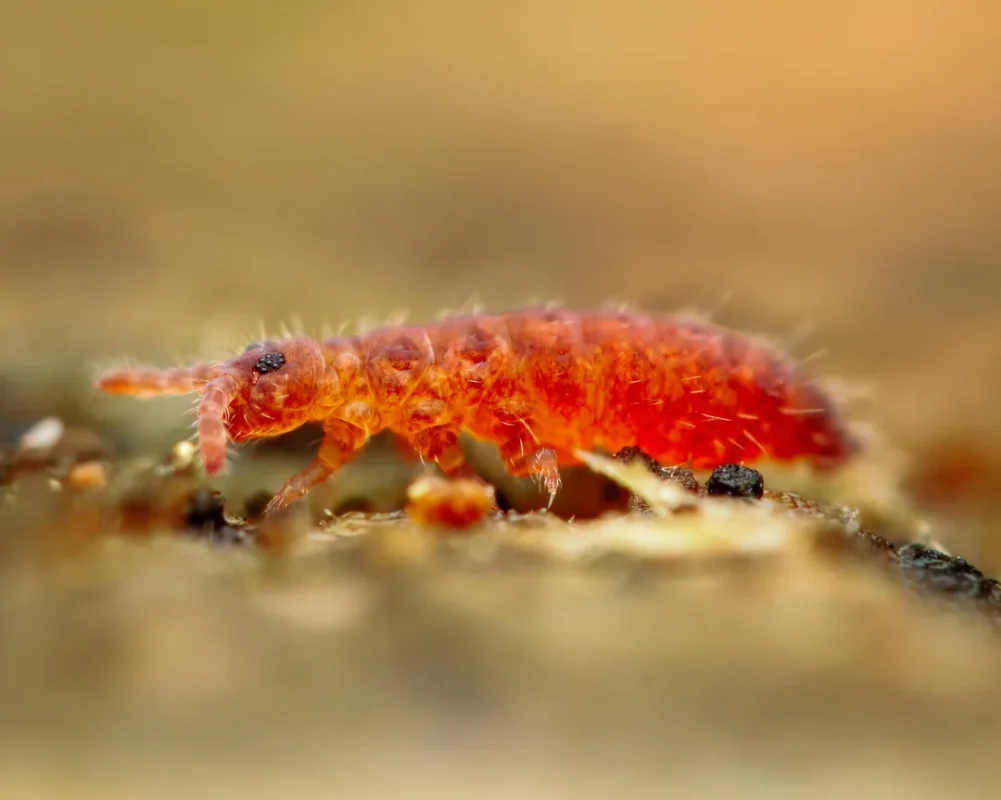
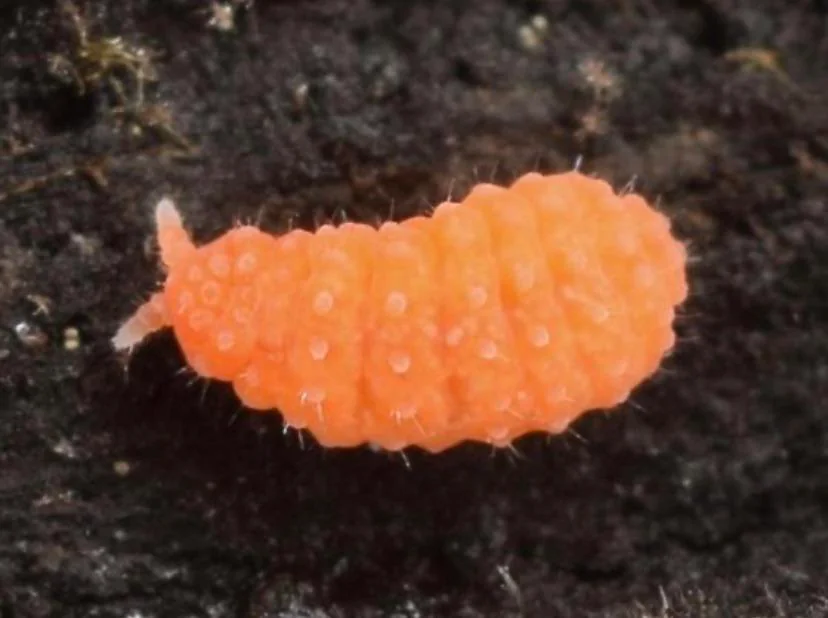
Our range includes white, pink, orange, lilac, yellow, green, blue, red, and silver species — cleanup crews that add colour to your build, not just function.
The process
How to order
from Springtails Culture
Choose your species
Start by figuring out what your setup needs. Tropical vivarium running warm and humid? Go for Tropical White, Tropical Pink, or one of our coloured tropical species. Temperate woodland build? Folsomia candida, Tomocerus minor, or Orchesella cincta. Want something rare and visually striking? Browse our Rare & Exotic range.
Not sure where to start? Every product listing includes a clear care level, habitat match, and pairing recommendations — and our FAQ and blog have guides for every setup type.
Pick your quantity
Every species is available in quantities from 50 to 1,000 springtails — with per-springtail pricing that drops as quantity increases. For a single new vivarium, 50–100 springtails is a solid starting point. For multiple enclosures, or if you want faster colony establishment, go higher.
All quantity options and their prices are shown on each product page — select the one that fits your setup and budget.
Choose your carrier & complete your order
At checkout, select your preferred shipping carrier — USPS, FedEx, or UPS — and your preferred service level. Express options are available for both domestic US and international orders. Enter your delivery address carefully — it’s your responsibility to ensure it’s correct.
We accept all major credit and debit cards and PayPal. Payment is processed securely — we never store your card details.
We prepare and ship your order
We ship live cultures Monday through Wednesday only — to ensure your package arrives before the weekend and never sits in a carrier facility over Saturday or Sunday. Orders placed after Wednesday are held and shipped the following Monday.
Before we pack your order, we check weather conditions along your transit route. If conditions are extreme, we’ll add heat or ice packs as needed — or hold your order and notify you. Every culture ships with a species care sheet included.
You’ll receive a tracking number by email as soon as your order ships.
Receive, check, and seed
Open your package immediately on delivery — don’t leave cultures sealed in transit packaging. Place them at room temperature out of direct sunlight and give them 2–4 hours to settle. Use the blow test to confirm activity: gently blow across the substrate surface — active springtails will respond to the CO₂ in your breath.
If anything looks wrong, contact us within 24 hours with a photo. Our live arrival guarantee covers every order — we reship, no questions asked.
Once they arrive
What to do after
your cultures arrive
Open immediately
Remove from transit packaging straight away. Don’t leave cultures sealed — they need fresh air and room temperature to recover from transit.
Let them settle
Place cultures at room temperature out of direct sunlight. Give them 2–4 hours before judging activity — transit stress is normal and most cultures recover quickly.
The blow test
Gently blow across the substrate. Springtails respond to CO₂ — if you see movement, your culture is alive and active. No movement after 4 hours? Contact us.
Seed your vivarium
Place the culture container inside your enclosure, remove the lid, and tap gently. Springtails will disperse into the substrate on their own — no intervention needed.
Seed 3–5 weeks early
For best results, seed springtails 3–5 weeks before introducing animals. This gives the colony time to reach functional density before the organic load of live animals arrives.
Sit back
A healthy springtail colony self-regulates. Feed lightly once a week if keeping as a standalone culture. In a vivarium, they’ll find their own food — and get on with the job.
Find your species
Not sure which species
is right for your setup?
Tropical Vivariums
Warm, humid setups running 22–28°C. Dart frog builds, tropical reptile enclosures, planted paludariums.
Browse tropical →Temperate Builds
Cool woodland terrariums, moss builds, compost setups, and cool-climate reptile or amphibian enclosures.
Browse temperate →Rare & Exotic
Collector species — giant iridescent Tomocerus, Thai Red, Devils Hole, Gold Rush, and more.
Browse rare →Moss Terrariums
Cool, damp, moss-rich closed terrariums. Species matched specifically to high-humidity low-light builds.
Browse all →Ready to build something
that cleans itself?
Every culture raised in-house in New Baden, Illinois. Shipped alive via USPS, FedEx, or UPS. Backed by our live arrival guarantee — no questions asked.