
Species Guides
Springtails vs Isopods: What’s the Difference?

Jul
Springtails vs Isopods: What’s the Difference and Do You Need Both?
If you’re setting up your first bioactive terrarium, you’ve almost certainly run into both of these terms and wondered whether you need one, the other, or both. It’s a fair question as they’re often mentioned together as if they’re interchangeable, but they actually fill different roles in an enclosure’s cleanup system. Understanding the difference will save you from either under-preparing your enclosure or buying something you don’t actually need yet.
Table of Contents
1. The Short Answer
Springtails and isopods are both cleanup organisms used in bioactive enclosures, but they specialize in different waste types and operate at different scales. Springtails handle fine organic matter like mold spores, small food particles, general substrate-level decay. Isopods handle bulkier waste like decomposing leaf litter, shed skin, larger leftover food. Most established bioactive enclosures run both together, since neither one covers the other’s role completely.
If you’re only able to start with one, springtails are generally the higher-priority addition for most enclosures, since mold control is usually the more immediate concern in a newly set up terrarium. But for a fully self-sustaining bioactive system, both together is the standard, well-tested approach.
2. What Springtails Do
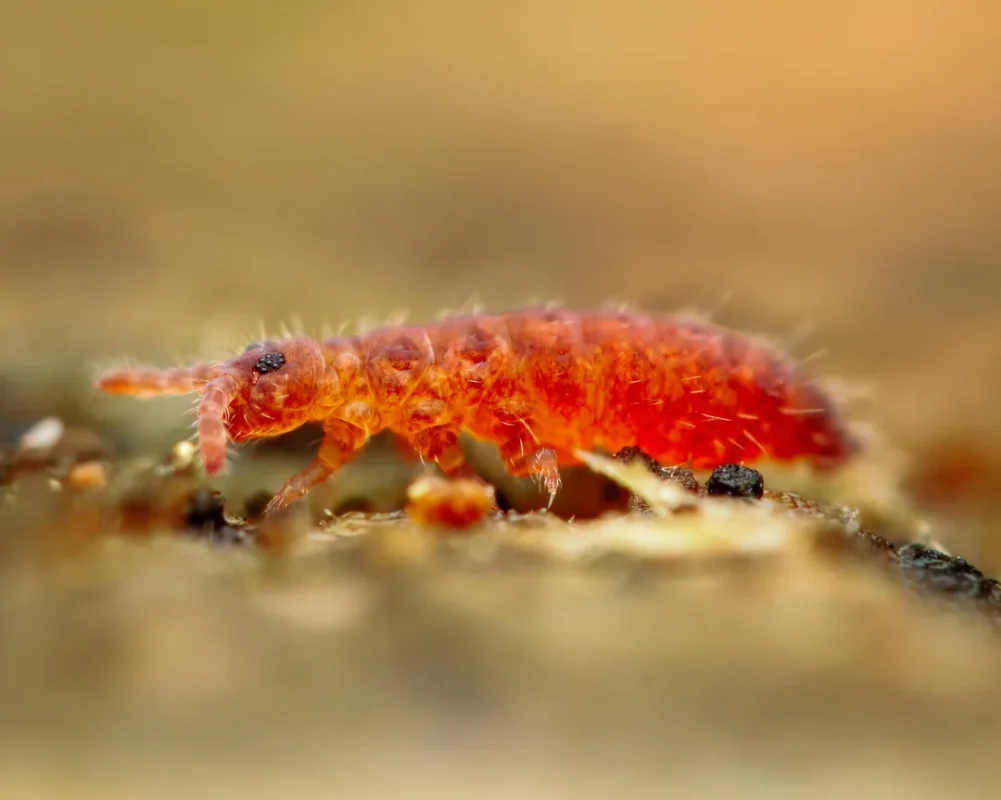
Springtails (Collembola) are tiny, typically under 2mm and specialize in consuming mold spores, fungal growth, and fine organic particles at the substrate surface and within small substrate pockets isopods can’t easily access. Their small size lets them work continuously in places manual cleaning realistically can’t reach, which is why they’re the primary line of defense against mold specifically (covered in detail in our mold guide) and a contributing factor in fungus gnat prevention (see our fungus gnats guide).
Beyond cleanup, some springtail species double as a live food source for small insectivores like dart frogs, particularly color-morph species with strong visual contrast as covered in our dart frog feeding guide.
3. What Isopods Do
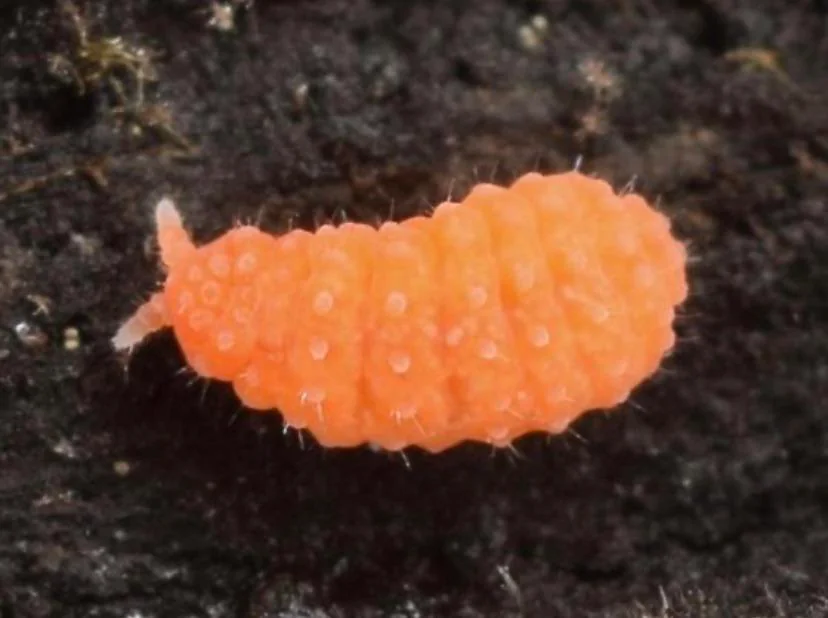
Isopods are considerably larger than springtails ranging from a few millimeters to over a centimeter depending on species and specialize in breaking down bulkier organic waste: decomposing leaf litter, larger leftover food pieces, shed skin, and other coarse decaying material. Their size means they need more open substrate surface area to move through effectively, but it also means they can process waste volumes springtails aren’t well-suited to handle.
Like springtails, some isopod species also serve as a supplemental live food source for larger insectivores, though this varies more by species and enclosure animal than it does with springtails.
We have a diverse variety of isopod species that haven’t been listed on our website yet but you can order directly from us through our instagram page.
4. Side-by-Side Comparison
| Springtails | Isopods | |
|---|---|---|
| Size | Under 2mm typically | Several millimeters to over a centimeter |
| Primary role | Mold spores, fine organic matter | Bulk waste, leaf litter, larger debris |
| Access | Tight substrate spaces, surface-level | Needs more open surface area |
| Reproduction speed | Generally faster under good conditions | Generally slower than springtails |
| Mold control | Primary defense | Minimal direct role |
| Live feeder use | Common for small insectivores (color morphs especially) | Varies more by species and predator size |
| Beginner priority | Usually the higher priority first addition | Strong complement once springtails are established |
5. Do You Need Both, or Just One?
If you’re dealing with an active mold problem right now: start with springtails. Isopods don’t meaningfully address mold, and it’s the more urgent issue in most newly noticed problem cases (see our crash troubleshooting guide if the issue has already progressed further than surface mold).
If you’re setting up a brand-new enclosure from scratch: seeding both together from the start is the standard, well-tested approach for a fully self-sustaining bioactive build, since they cover different waste types without meaningfully competing for the same resources.
If your enclosure produces a lot of bulkier waste like heavy leaf litter, a larger animal, more substantial feeding leftovers, then isopods become more important than in a lighter-bioload setup, since that’s specifically the waste category springtails aren’t built to handle.
If budget or order size is a constraint and you can only start with one: springtails are the more broadly useful first purchase for most setups, given their role in mold and fungus gnat prevention, which tend to be the earliest and most common problems new keepers run into.
6. Frequently Asked Questions
Do I need both springtails and isopods in a bioactive terrarium? Not strictly required, but most established bioactive enclosures run both together, since they handle different waste types and springtails focus on mold and fine organic matter, while isopods handle bulkier waste like leaf litter and shed skin.
Which should I buy first, springtails or isopods? Springtails are generally the higher-priority first purchase for most enclosures, since mold control is usually the more immediate concern in a new setup, and isopods don’t meaningfully address mold.
Do springtails and isopods compete with each other for food? Not significantly at typical population densities, since they specialize in different waste types and different substrate zones. springtails at the fine, surface level, isopods with bulkier, more open-area waste.
Can isopods replace springtails for mold control? No. Isopods don’t play a meaningful direct role in mold control the way springtails do. If mold is your primary concern, springtails are the more relevant addition.
Do isopods and springtails need the same care? Broadly similar conditions like consistent moisture and appropriate temperature but specific requirements vary by species within each group, similar to the temperature and humidity differences covered in our temperate vs. tropical springtails guide.
Springtails and isopods aren’t competing options as they’re complementary pieces of the same cleanup system, each covering a waste category the other doesn’t. If you’re building a bioactive enclosure from scratch, seeding both together gives you the most complete, resilient setup. If you’re troubleshooting an active problem right now, start with whichever one actually matches the issue you’re seeing. Browse our full range of live springtail cultures to get started, or check our sizing guide to make sure your population matches your enclosure’s needs.
