
Buying Guides
Springtails for Dart Frogs — Best Species, Seeding Guide & Vivarium Setup 2026
Jun
Springtails for Dart Frogs: Best Species and Feeding Setup
Dart frogs are one of the few animals where springtails do double duty. They’re not just a cleanup crew keeping your vivarium mold and waste-free, they’re also a genuine, self-replenishing live food source your frogs will actively hunt. That dual role is exactly why dart frog keepers can’t just grab whatever springtail culture is cheapest or most available; the right species choice affects feeding response as much as cleanup performance.
This guide covers which springtails actually work best for dart frog vivariums, why color and size matter more here than in a typical reptile terrarium, and how to set up feeding so your frogs get consistent access to a live food source without crashing your cleanup crew population.
Table of Contents
1. Why Dart Frog Vivariums Need Springtails Specifically
Dart frog vivariums run warm and consistently humid which are exactly the conditions that produce mold quickly and support fungus gnat larvae. Springtails address both, the same way they do in any bioactive enclosure. But dart frogs add a second requirement most other reptile and amphibian keepers don’t have: a live, appropriately-sized food source that replenishes itself inside the enclosure rather than needing to be added by hand every day.
Most dart frog species have small mouths and specialize in tiny prey. Fruit flies are the standard staple feeder for this reason, but springtails fill an important supplementary role; particularly for juvenile frogs, smaller dart frog species, and as a consistent background food source between scheduled fruit fly feedings.
2. Cleanup Crew vs. Live Feeder: Two Different Jobs
It’s worth separating these two functions clearly, since the species that’s best for one isn’t automatically best for the other:
As a cleanup crew, any healthy, established springtail population in temperate or tropical will consume mold, waste, and organic debris effectively. Species choice here mostly comes down to matching your vivarium’s temperature and humidity, covered in Section 3.
As a live feeder, species choice matters more, because visibility and feeding response come into play. A springtail that blends into dark substrate is much harder for a hunting frog to spot and target than one with strong color contrast which is exactly why species like Thai Red have become popular specifically in the dart frog side of the hobby, beyond their cleanup function.
Most dart frog keepers end up wanting a species that does both jobs well, rather than running two separate cultures which is why the species comparison below weighs both factors together.
3. Best Springtail Species for Dart Frogs
3.1 Thai Red Springtails
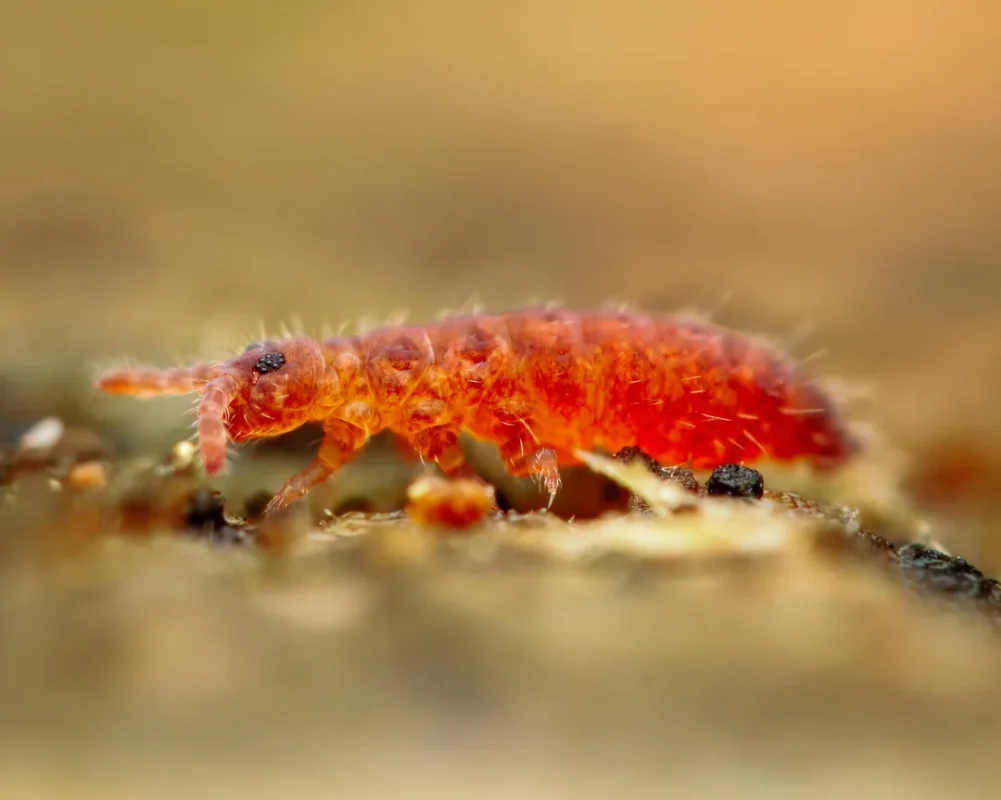
Lobella cf. sp. Thai Red is widely considered the standout choice specifically for dart frog vivariums, for one clear reason: their bright red coloration provides strong visual contrast against dark substrate, which noticeably improves feeding response in hunting species compared to duller-colored springtails. Beyond the visual advantage, they perform the same mold and waste cleanup function as any other tropical springtail, so you’re not trading cleanup performance for feeding value.
They’re also a rare, specialist species, which means pricing sits at the higher end compared to staple springtails and a worthwhile tradeoff for most dedicated dart frog keepers given the dual-purpose benefit. Our Thai Red Springtails Complete Guide covers full care, breeding, and setup details specific to this species, and current stock is available on the Thai Red Springtails product page.
3.2 Tropical Pink Springtails
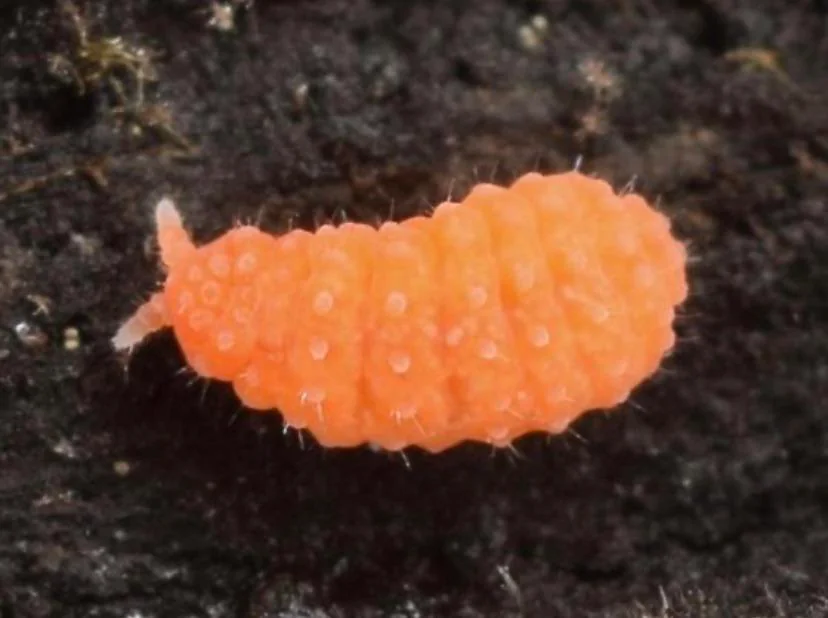
Coecobrya cf. tenebricosa offers a similar visibility advantage to Thai Red, with a distinct pink tone that stands out against typical dark vivarium substrate, though generally with less color intensity than red springtails. They’re a solid middle-ground option: still a strong cleanup performer suited to warm, humid dart frog conditions, with a visual advantage over standard tropical springtails, at a lower price point than Thai Red. Check current availability on our Tropical Pink Springtail Culture page.


3.3 Temperate White Springtails
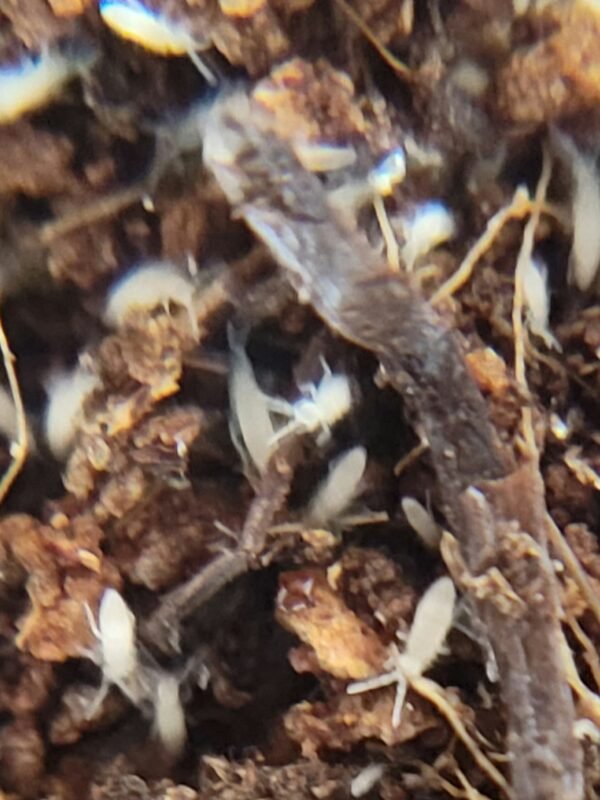
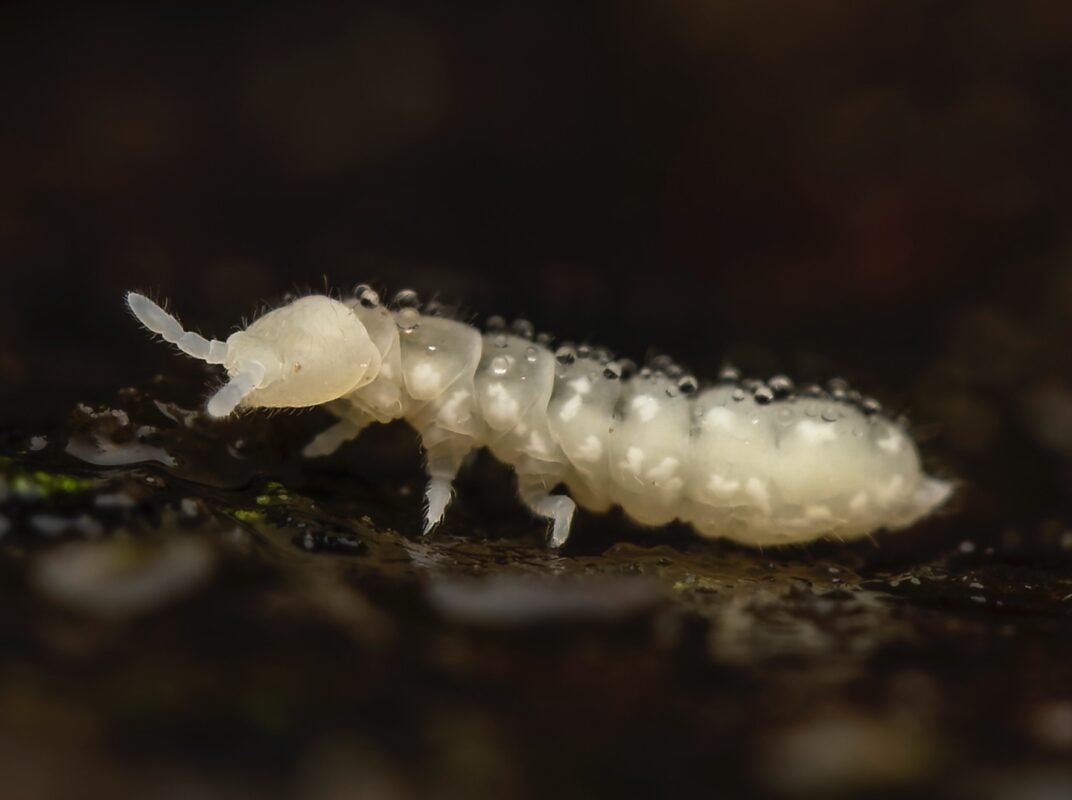
Temperate whites are the most commonly used springtail overall in the hobby, but they’re a less ideal fit for dart frog vivariums specifically, for two reasons: their preferred temperature range runs cooler and drier than most dart frog setups, and their white coloration blends in heavily against dark, planted substrate, which reduces feeding response compared to a color-contrasted species. They still function adequately as a cleanup crew if that’s the only role you need filled, but most dedicated dart frog keepers choose a tropical or color-morph species instead.
3.4 Standard Tropical Springtails
Standard tropical springtails match dart frog vivarium conditions well from a temperature and humidity standpoint, and perform reliably as a cleanup crew. Where they fall short of Thai Red or Tropical Pink is visibility and their more muted coloration doesn’t provide the same contrast advantage against dark substrate. They’re a reasonable choice if cleanup is your priority and live feeding is a secondary consideration, or as a companion culture alongside a color-morph species.
4. Why Color and Size Matter for Feeding Response
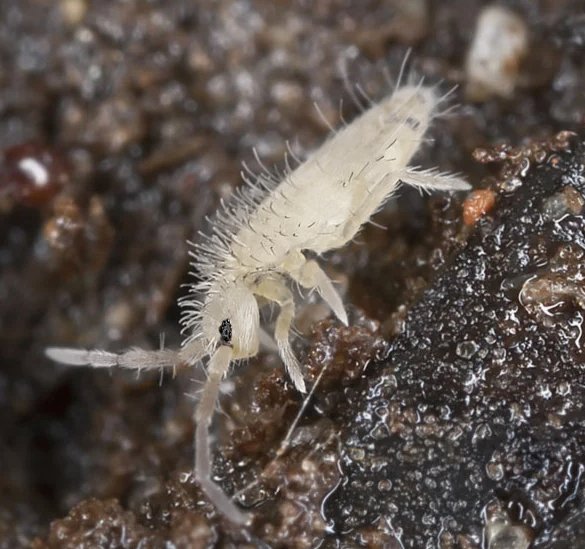
Dart frogs are visual hunters locating prey primarily by sight, tracking movement and contrast against their surroundings. A springtail that closely matches the color of dark vivarium substrate is functionally harder to detect than one with strong color contrast, even at identical size and movement speed. This is the entire reasoning behind why red and pink springtail morphs have become popular specifically in the dart frog community, separate from any cleanup-crew consideration.
Size matters similarly, though in the opposite direction from what many new keepers assume: smaller dart frog species and froglets need correspondingly small prey. Springtails are already small enough to suit even the tiniest dart frog species, which is part of why they remain a staple supplemental feeder even in vivariums built around thumbnail dart frog species with very limited gape size.
5. Setting Up a Dual-Purpose Culture in a Dart Frog Vivarium
- Seed the vivarium substrate directly, rather than relying solely on a separate feeding culture, so the population establishes as a genuine part of the enclosure’s ecosystem rather than existing only as a harvestable feeder stock.
- Maintain a separate backup culture outside the vivarium at the same time. This protects your feeder supply if the in-vivarium population takes a temporary dip, and gives you a source to reseed from if needed.
- Let the population fully establish before relying on it as a primary feeder source. As covered in our sizing guide, this typically takes one to two weeks, and a heavily-hunted population needs even more room to establish before it can sustain regular predation.
- Continue supplementing with fruit flies as the primary staple feeder, using the vivarium’s springtail population as a supporting, self-replenishing food source rather than the sole food supply — especially for adult frogs with higher caloric needs than springtails alone can practically supply.
- Watch for population thinning if you notice frogs actively hunting springtails at a high rate. This is the main sign you may need to reseed or reduce feeding pressure, covered further in Section 6.
6. Avoiding a Feeder Crash: Balancing Harvest and Population
A dedicated feeder population in an actively hunted vivarium faces a different pressure than a standalone cleanup-crew culture: predation removes individuals continuously, on top of the normal factors (moisture, temperature, feeding) that affect any culture. A few practical safeguards:
- Keep the backup culture (Section 5) genuinely separate from the vivarium population, so a heavily-hunted in-vivarium population always has a source to reseed from.
- Watch for the same undersized-culture warning signs covered in our sizing guide and mold returning despite an established population, or a population that looked active initially but has visibly thinned over a few weeks.
- Reseed proactively rather than reactively. If you notice active, frequent hunting behavior from your frogs, that’s a reasonable signal to add a fresh culture on top of the existing population before it visibly declines, rather than waiting until cleanup performance drops off.
7. Frequently Asked Questions
What’s the best springtail for dart frogs? Thai Red springtails are widely considered the top choice for dart frog vivariums specifically, due to their bright red coloration providing strong visual contrast against dark substrate, which improves feeding response compared to duller-colored species, while still performing the same mold and waste cleanup function.
Do dart frogs actually eat springtails? Yes. Springtails are a genuine live food source for dart frogs, particularly valuable for smaller species and froglets, and serve as a self-replenishing supplemental feeder alongside staple foods like fruit flies.
Can springtails be the only food source for dart frogs? Generally not recommended as a sole food source, especially for adult frogs with higher caloric needs. Springtails work best as a supplemental, self-replenishing feeder alongside a primary staple like fruit flies.
Why do red springtails work better for dart frogs than white springtails? Dart frogs hunt primarily by sight, tracking movement and color contrast. Red or pink springtail morphs stand out clearly against dark vivarium substrate, while white or pale springtails blend in more, making them harder for frogs to detect and target.
Will springtails survive in a heavily planted dart frog vivarium? Yes, springtails thrive in the same warm, humid, planted conditions dart frog vivariums are built around, which is part of why they’re a standard component of dart frog bioactive setups.
How do I keep my springtail feeder population from running out? Maintain a separate backup culture outside the vivarium, watch for signs of population thinning from heavy predation, and reseed proactively if you notice frequent active hunting rather than waiting for cleanup performance to visibly drop.
For dart frog keepers, springtail choice is one of the few decisions in the hobby that genuinely serves two purposes at once; cleanup and live feeding which makes it worth choosing deliberately rather than defaulting to whatever’s cheapest. Browse our Thai Red Springtails if feeding response is your priority, or our Tropical Pink Springtail Culture for a strong middle-ground option, and check our sizing guide to make sure your vivarium’s population is large enough to support active predation.
