
Species Guides
Lobella vs Rambutanura: Thai Red Springtails Compared in 2026

Nov
Thai Red vs Thai Red Spiky Springtails: Lobella vs Rambutanura – What’s the Difference?
Springtails are among the most diverse and fascinating organisms kept by terrarium enthusiasts, bioactive keepers and microfauna collectors. Although many people first discover them as tiny white organisms living in damp soil, the hobby has expanded considerably. Today, keepers can explore springtails with unusual body shapes, striking colors, specialized feeding habits and behaviors that make them interesting far beyond their traditional role as a terrarium cleanup crew.
Among the more unusual collector varieties are two red springtails that often attract attention for similar reasons: Lobella cf. sp. ‘Thai Red’ and Rambutanura sp. ‘Thai Red Spiky’.
At first glance, someone unfamiliar with these cultures might assume that they are simply two color variations of the same springtail. Both are associated with Southeast Asian hobby cultures, both display impressive red coloration, and both are unusual compared with the common white springtails used in bioactive enclosures.
However, they should not be treated as interchangeable.
The standard Thai Red is kept as an organic-substrate springtail and can be offered supplemental foods such as brewer’s yeast and fish flakes. Thai Red Spiky, on the other hand, is maintained as a specialist slime-mold-feeding collector springtail. Its feeding requirements make it a considerably different project for a keeper.
Their differences extend beyond feeding. Their appearance, culture management, suitability for beginners, and the way a keeper should approach their long-term maintenance all deserve separate consideration.
Table of Contents
In this guide, we will compare Lobella and Rambutanura in detail, explain what makes each culture distinctive, discuss their known care requirements, and help you decide which one is more suitable for your collection.
If you are considering buying either variety, understanding these differences before ordering is especially important. A beautiful springtail culture is only a good purchase when you can provide the environment and food it needs to remain healthy.
Quick Answer: What Is the Difference Between Lobella and Rambutanura?
The easiest way to distinguish the two is to look at their body appearance and feeding requirements.
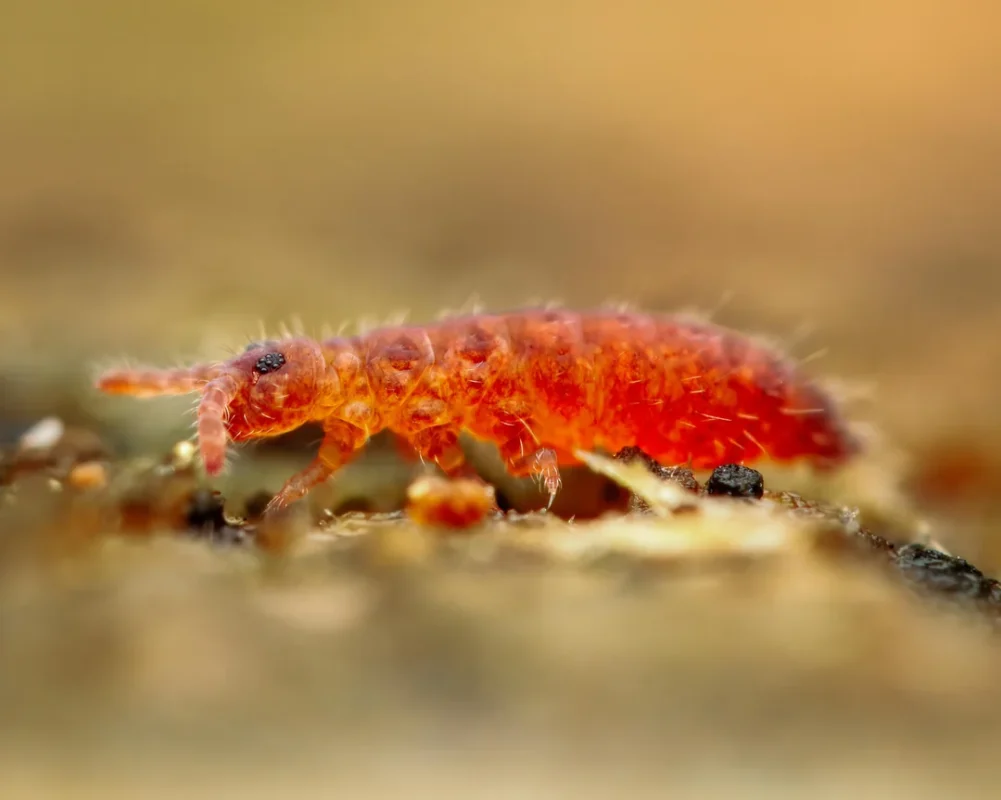
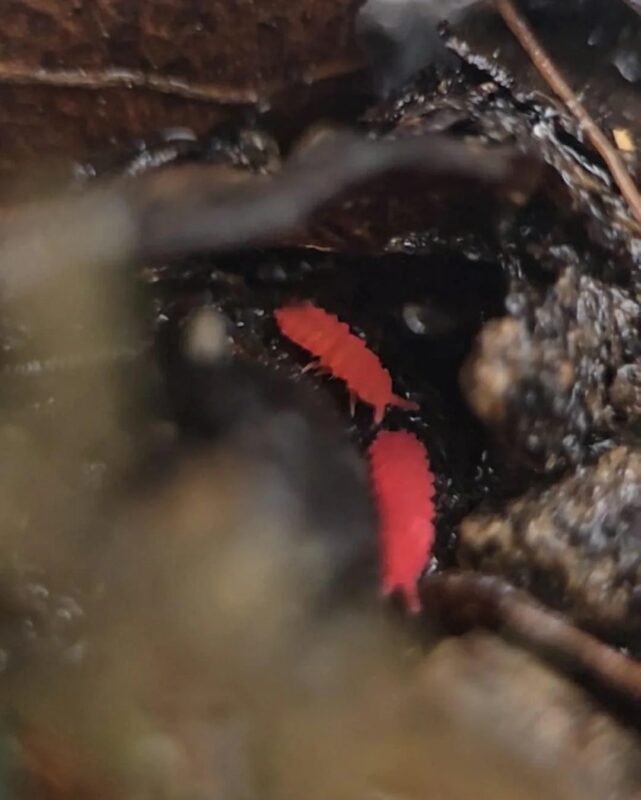
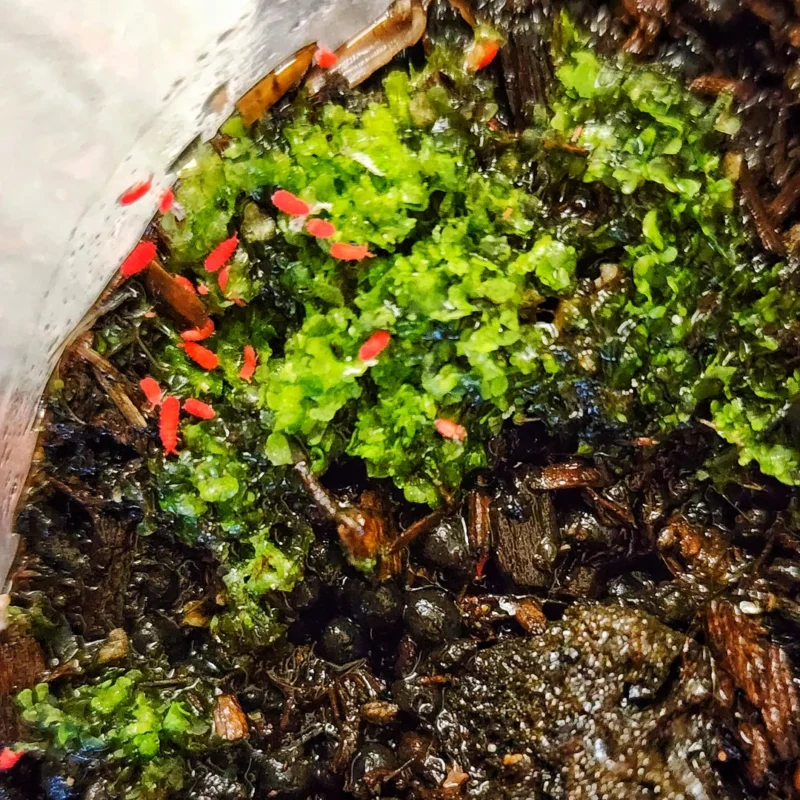
Lobella cf. sp. ‘Thai Red’ is the standard Thai Red springtail. It is recognized by its vivid red coloration, relatively robust body and generally slow-moving behavior. It is maintained in a deep, moisture-retaining organic substrate. Supplemental foods such as brewer’s yeast, fish flakes and specialized springtail food can be used alongside the microbial and fungal resources developing in the substrate.
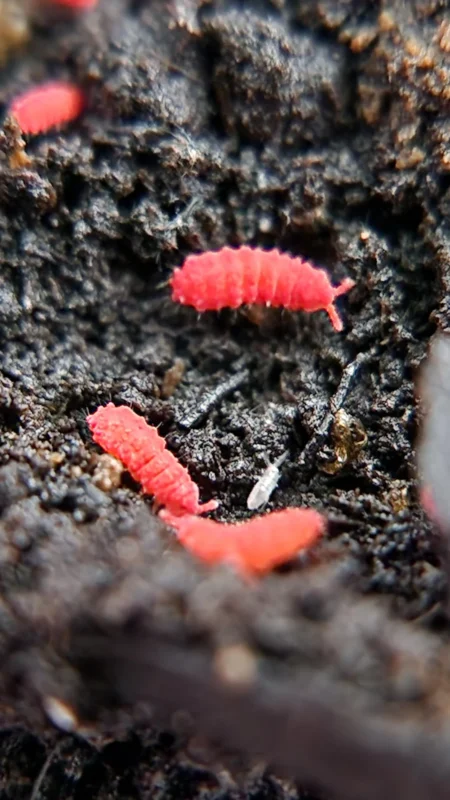

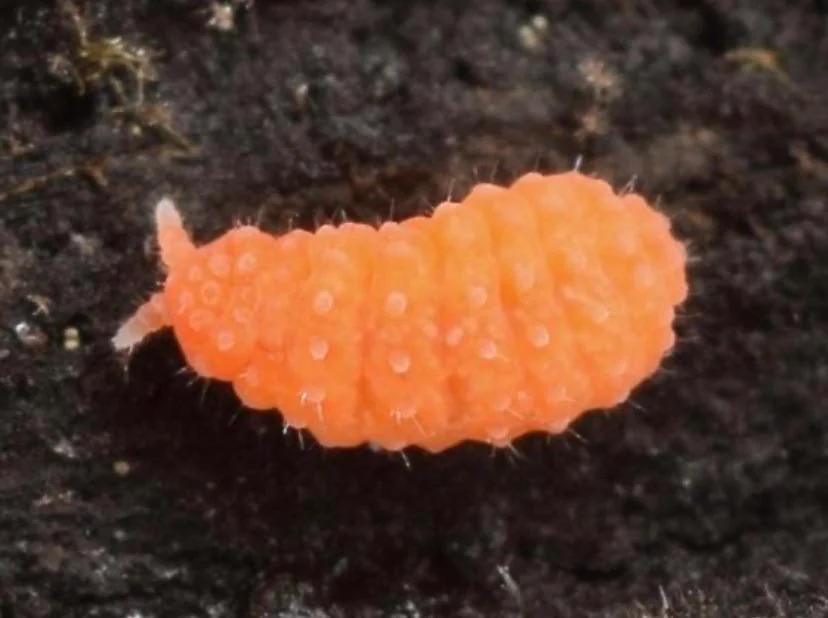
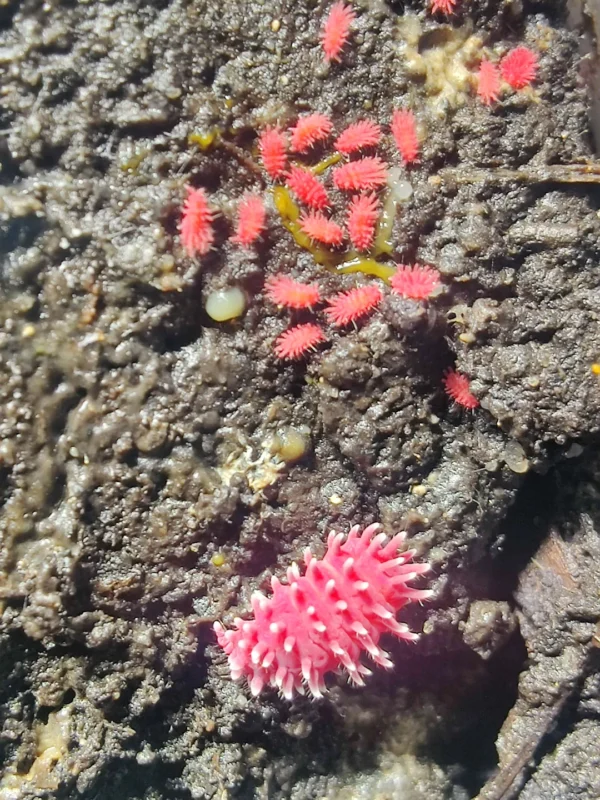
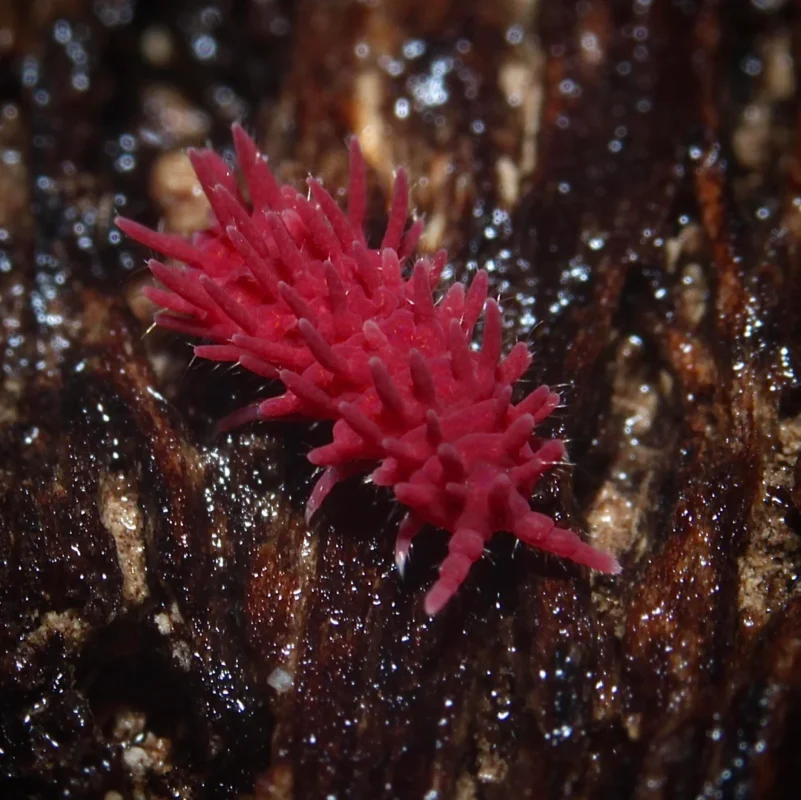
Rambutanura sp. ‘Thai Red Spiky’ is a different collector springtail distinguished by its textured, spiky-looking body and intense red coloration. It is maintained as a specialist slime-mold feeder. A suitable live slime mold food source is an important part of its culture management.

The two names refer to different genus-level hobby identifications. They are not simply two names for the same springtail.
| Feature | Lobella cf. sp. ‘Thai Red’ | Rambutanura sp. ‘Thai Red Spiky’ |
|---|---|---|
| Common name | Thai Red | Thai Red Spiky |
| Hobby identification | Lobella cf. sp. | Rambutanura sp. |
| Appearance | Smooth-looking, robust red body | Distinctively textured, spiky-looking red body |
| Color | Bright to deep red | Intense carmine or coral-red |
| General behavior | Slow-moving, generally non-jumping in culture observations | Slow and deliberate in culture observations |
| Main culture medium | Deep organic substrate | Species-appropriate moist culture medium |
| Feeding approach | Organic microbial resources and supplemental foods | Live slime mold |
| Supplemental yeast or fish flakes | Used as supplemental foods | Should not be assumed to replace its live slime-mold food |
| Culture difficulty | Requires attention to substrate and moisture | More specialized feeding management |
| Best suited to | Collectors and keepers comfortable with organic cultures | Experienced collectors interested in specialist springtails |
These are practical husbandry distinctions based on the cultures offered by Springtails Culture and keeper observations. They should not be interpreted as a complete scientific taxonomic diagnosis.
1. Understanding the Names: Lobella vs Rambutanura
Before comparing their care requirements, it is useful to understand what the names actually mean.
Springtails belong to the subclass Collembola, a diverse group of small arthropods found in soil, leaf litter, moss, decaying wood and other environments where moisture and microorganisms are available.
The hobby uses a mixture of scientific genus names, provisional identifications and descriptive trade names. This is particularly common with rare springtails collected from regions where their exact species identification may not yet be established.
That distinction matters when discussing Thai Red and Thai Red Spiky.
What does Lobella cf. sp. mean?
The standard Thai Red springtail is sold under the hobby identification Lobella cf. sp. ‘Thai Red’.
The genus name is Lobella. The abbreviation ‘cf.’ is commonly used in biological identification when an organism appears comparable to a particular taxon but its identification is not confirmed.
In practical terms, this means the culture is being identified within the Lobella group, while the exact species-level identification remains qualified.
The name ‘Thai Red’ is the familiar hobby name used to distinguish this distinctive red culture from other springtails.
The culture became known among international springtail enthusiasts around the end of 2021. Its strong red coloration and unusual appearance helped establish its reputation as a desirable collector variety.
For keepers, the important point is that the name Lobella should not be replaced with Rambutanura simply because both cultures are red.
You can find the standard culture here:
Shop Lobella cf. sp. ‘Thai Red’ Springtails
What does Rambutanura sp. mean?
Thai Red Spiky is offered under the hobby identification Rambutanura sp..
The genus name is different from Lobella, and the common name ‘Thai Red Spiky’ describes its particularly distinctive body appearance.
The abbreviation ‘sp.’ indicates that the organism is identified to genus level, but a confirmed species name has not been established in the product identification.
Its body has a visibly textured appearance, with prominent projections that give it the spiky look responsible for its common name.
Unlike the standard Thai Red, Rambutanura is maintained as a specialist slime-mold feeder. This is one of the most important distinctions for anyone considering keeping it.
You can find this culture here:
Shop Rambutanura sp. ‘Thai Red Spiky’ Springtails
Why correct identification matters
Correct identification is more than a naming preference.
When two springtails have different feeding requirements, substrate preferences or culture-management needs, confusing them can lead to poor husbandry decisions.
A keeper who purchases Thai Red Spiky expecting it to behave exactly like standard Thai Red may prepare an unsuitable feeding routine. Similarly, someone purchasing standard Thai Red may unnecessarily assume that a live slime-mold culture is its only possible food source.
That is why we recommend using the complete product names when discussing these varieties:
- Lobella cf. sp. ‘Thai Red’
- Rambutanura sp. ‘Thai Red Spiky’
Using the complete names helps avoid confusion when researching care information, comparing cultures or communicating with other collectors.
2. Appearance: How to Tell Them Apart
One of the reasons these springtails are so popular among collectors is that they are visually different from the familiar white springtails commonly used in terrariums.
However, the standard Thai Red and Thai Red Spiky have different visual characteristics.
Lobella Thai Red: A bold, solid red appearance
Lobella Thai Red is known for its vivid red coloration and relatively robust body.
Depending on the individual and lighting conditions, its coloration may appear bright red, deep red or slightly darker against the organic substrate.
Its body is comparatively smooth-looking when viewed beside the highly textured Rambutanura.
The animals are also large enough to be observed more easily than many of the tiny white springtails commonly used in bioactive enclosures. Keeper observations place their approximate size within the 1–5 mm range, although individual size and viewing conditions can vary.
Their slow-moving behavior makes it possible to observe them carefully as they travel through the organic substrate and investigate suitable feeding areas.
This combination of color, body shape and movement makes Lobella Thai Red especially appealing to collectors who enjoy observing springtails rather than simply maintaining them as an invisible cleanup crew.
Rambutanura Thai Red Spiky: A distinctive textured body
Rambutanura Thai Red Spiky is immediately recognizable for its unusual body texture.
Instead of the comparatively smooth-looking appearance associated with standard Thai Red, this variety has prominent projections across its body. Under magnification, these give the animal a textured, almost coral-like appearance.
Its intense red coloration makes the texture even more noticeable.
The contrast between the body projections and the red pigmentation is a major reason collectors are interested in this springtail.
The Thai Red Spiky is also relatively large for a springtail. Its approximate size is often described by keepers as around 3–5 mm, although size can vary.
Its movement is generally slow and deliberate in culture observations. This gives keepers more opportunity to observe its appearance and feeding behavior.
Why photographs can sometimes be misleading
When comparing these cultures online, remember that photographs can make the two look more similar or more different than they appear in person.
Several factors affect the appearance of springtails in macro photographs:
- Lighting direction and intensity.
- Camera magnification.
- The color of the substrate.
- The age and condition of the individual.
- Whether the animal is photographed from above or from the side.
- Image sharpening and post-processing.
A bright red springtail photographed under strong lighting may look considerably lighter than the same animal photographed against a dark, moist substrate.
For this reason, body texture and the overall appearance of the animal should be considered alongside coloration.
The most useful visual comparison is a side-by-side photograph of living individuals from both cultures, photographed under similar lighting and magnification.
3. Movement and Behavior
Springtails are often described as tiny jumping organisms, but not every springtail behaves in the same way.
Many familiar springtails use a structure called the furcula to jump when disturbed. This behavior is one of the reasons they can be difficult to observe in open culture containers.
Both Lobella Thai Red and Rambutanura Thai Red Spiky are generally described by keepers as slow-moving, non-jumping or predominantly crawling varieties in culture conditions.
This does not mean that every individual will behave identically in every situation. Environmental conditions, disturbance and individual behavior can affect movement.
How Lobella moves
Lobella Thai Red generally moves slowly across the substrate and through the organic material.
Instead of immediately disappearing through repeated jumps, individuals can often be observed exploring the surface and moving through the substrate.
Their movement makes them interesting to observe in a culture container, particularly when the substrate contains visible fungal growth or other microbial resources.
They may also be easier to monitor than fast-moving springtails because their activity is less likely to make them disappear from view immediately after the container is opened.
How Rambutanura moves
Rambutanura Thai Red Spiky is also associated with slow, deliberate movement.
Its behavior makes it an interesting species for collectors who enjoy watching feeding activity and interactions with the culture medium.
Because it is maintained as a specialist feeder, observation should include more than simply checking whether individuals are moving.
Keepers should also monitor the condition of the live food source, moisture in the medium and general activity across the culture.
Does non-jumping behavior mean they cannot escape?
No.
Even if a springtail does not rely on jumping as its main escape response, it can still move through small openings or climb suitable surfaces.
Culture containers should have secure lids and appropriate ventilation.
Do not leave a culture container open simply because the springtails appear slow-moving.
4. Feeding Requirements: The Biggest Difference
If there is one section of this comparison that every potential buyer should read carefully, it is this one.
The two cultures should not be treated as having identical nutritional requirements.
Lobella Thai Red can be maintained with suitable organic substrate and supplemental foods. Rambutanura Thai Red Spiky is maintained as a specialist slime-mold feeder.
Understanding this difference is essential to successful long-term culture management.
What does Lobella Thai Red eat?
Lobella Thai Red is associated with organic substrates containing fungal growth, microbial activity and decomposing organic material.
Like other springtails, it participates in the complex feeding relationships found in soil and decaying organic environments.
The organic substrate is not simply a surface on which the springtails live. It provides structure, moisture retention and a developing microbial environment that supports the culture.
Supplemental foods can also be offered.
Suitable options include:
- Brewer’s yeast.
- Tropical fish flakes.
- Specialized springtail food.
- Other appropriate supplemental foods used in springtail culture maintenance.
The amount and frequency should be adjusted according to colony size, food consumption and the condition of the substrate.
Avoid adding large quantities of food at once. Uneaten food can decompose, encourage unwanted microbial growth and make the culture harder to manage.
A good feeding routine is based on observation rather than automatically adding more food whenever the culture is opened.
If food remains untouched, reduce the quantity and investigate whether the culture’s moisture, temperature and general condition are appropriate.
Can Lobella Thai Red eat brewer’s yeast?
Brewer’s yeast is one of the supplemental foods used for Lobella Thai Red cultures.
It is convenient because only a small amount is needed, and it can be placed on the surface where the springtails can reach it.
However, yeast should not replace suitable substrate conditions.
A culture with the wrong substrate or inconsistent moisture will not necessarily become healthy simply because more yeast is added.
The best approach is to provide a suitable organic environment and use supplemental food carefully.
Can Lobella Thai Red eat fish flakes?
Fish flakes can also be used as a supplemental food.
They should be offered in small portions, with the quantity adjusted to the population and the rate at which the food is consumed.
Do not assume that more food means faster reproduction.
Excess food can create problems, particularly in warm and humid containers where organic material decomposes quickly.
What does Rambutanura Thai Red Spiky eat?
Rambutanura Thai Red Spiky is maintained as a specialist slime-mold feeder.
This makes its feeding routine very different from that of a typical springtail culture maintained with yeast or fish flakes.
The culture requires access to a suitable live slime mold food source.
For this reason, keepers interested in Thai Red Spiky should prepare their feeding arrangements before purchasing the culture.
It is not advisable to buy the animals first and only begin researching their food requirements after they arrive.
The availability and condition of suitable live food should be considered part of the culture setup.
Why is live slime mold important?
Slime molds are fascinating organisms that form part of the microbial food environment in many damp habitats.
Some springtails are associated with specialized feeding relationships involving slime molds. These springtails may not respond to conventional dry foods in the same way as species maintained on yeast or fish flakes.
For Rambutanura Thai Red Spiky, live slime mold is the feeding approach used in our culture management.
A dry food sprinkled onto the substrate should not be assumed to provide an adequate replacement.
The condition of the slime mold also matters. Old, deteriorating or contaminated food should not simply be left in the container indefinitely.
Can I use the same food for both cultures?
You should not assume that you can.
| Food | Lobella Thai Red | Rambutanura Thai Red Spiky |
|---|---|---|
| Brewer’s yeast | Suitable supplemental option | Not a substitute for its live slime-mold food |
| Fish flakes | Suitable supplemental option | Not a substitute for its live slime-mold food |
| Specialized springtail food | Can be used as supplemental food | Do not assume it is sufficient |
| Organic microbial substrate | Important part of culture environment | May support the environment but does not replace the required food source |
| Live slime mold | Not its defining feeding requirement | Central to its specialist feeding routine |
The key lesson is simple: the feeding requirements of Lobella and Rambutanura are not interchangeable.
For more information about slime mold, read our How to Start and Maintain a Slime Mold Culture Guide.
5. Substrate Requirements: Organic Soil vs Specialist Culture Medium
Substrate is another important consideration when keeping rare springtails.
Many hobbyists begin with common white springtails, which can often be maintained on relatively simple charcoal or clay-based setups.
However, the same approach should not automatically be applied to every species.
The substrate must support the requirements of the particular culture.
Lobella Thai Red needs a deep organic environment
One of the most important aspects of maintaining Lobella Thai Red is providing a suitable organic substrate.
Unlike common cultures that can be maintained successfully on activated charcoal or clay, standard Thai Red is best maintained in a deep, moisture-retaining organic medium.
A suitable substrate should provide:
- Several centimeters of depth.
- Good moisture retention.
- Loose structure that allows movement through the medium.
- Organic material that supports microbial and fungal development.
- Enough structure to prevent the substrate from becoming a compacted, waterlogged mass.
- Appropriate airflow within the culture container.
The depth is important because Lobella is associated with moving through and occupying organic material rather than simply living on a bare surface.
A shallow layer may not provide the same environment as a deeper organic substrate.
Can I keep Lobella Thai Red on charcoal?
Charcoal is useful for many springtail cultures, but it should not be relied upon as the sole breeding medium for standard Thai Red.
The main difference is that Lobella benefits from a deeper organic environment.
Charcoal alone does not provide the same structure and organic resources as a suitable soil-based substrate.
If you are setting up a dedicated Lobella culture, prepare the organic medium before introducing the springtails.
Can I use isopod substrate?
A suitable organic bioactive or isopod substrate can provide a useful starting point.
The important consideration is the actual composition of the substrate.
It should retain moisture while remaining structured and breathable.
Avoid materials that become compacted or remain saturated for long periods.
Our isopod and bioactive substrate options can be explored alongside the culture requirements described on the Lobella Thai Red product page.
What substrate should I use for Rambutanura?
Rambutanura should be maintained using a culture medium appropriate to its specialist feeding requirements.
The priority is maintaining a stable, moist environment in which the live food source can be maintained without allowing the substrate to become flooded or foul.
A suitable setup should provide:
- Consistent moisture.
- A stable environment for the animals and their food.
- Enough structure to prevent excessive standing water.
- Appropriate ventilation.
- A manageable area for introducing and replacing live food.
- A way to observe the condition of the culture.
Keep the feeding area clean enough that deteriorating food does not accumulate.
Do not assume that a substrate suitable for Lobella will automatically be ideal for Rambutanura.
Even when two springtails come from broadly similar regions, their captive requirements can be different.
6. Temperature and Moisture
Temperature and moisture are among the most important variables in springtail culture management.
Both Lobella and Rambutanura should be kept in stable environments, but their individual requirements should be considered separately.
Lobella Thai Red temperature
For Lobella Thai Red, the recommended husbandry range on our product guide is approximately:
24–28°C (75–82°F).
This provides a warm environment appropriate for maintaining the tropical culture.
The springtails may also survive and develop at ordinary room temperatures, although activity and reproductive development can be slower.
Avoid placing the container near a window where direct sunlight can heat the substrate.
Also avoid sudden changes in temperature.
A culture that experiences repeated temperature fluctuations may become less active or show slower development.
Lobella Thai Red moisture
The substrate should remain consistently moist.
However, consistently moist does not mean flooded.
The goal is to maintain enough moisture throughout the organic substrate to support the springtails and the microbial environment without allowing standing water to accumulate.
A dry surface does not always mean the entire substrate is dry, so check the medium carefully before adding more water.
Excessive watering can create anaerobic conditions and encourage unwanted bacterial growth.
Rambutanura Thai Red Spiky temperature
Our Rambutanura product guide gives an approximate temperature range of:
20–28°C (68–82°F).
The important point is consistency.
Avoid exposing the culture to sudden temperature changes, extreme heat or prolonged cooling.
Temperature should also be considered in relation to the live slime mold
