

Gold Rush Springtails | Sminthurus viridis var. Springtail Culture | Rare Golden Globular Collector Species
Price range: $35.00 through $460.00
Buy Sminthurus viridis var. — the Gold Rush Springtail — one of the rarest and most visually distinctive collector springtail species available.
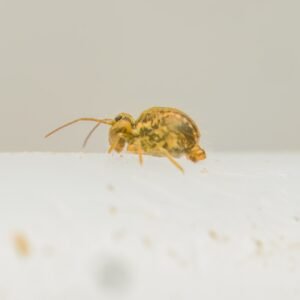
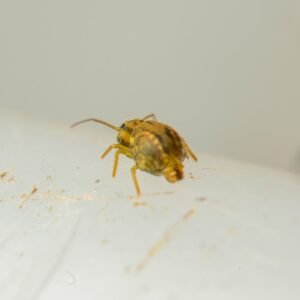
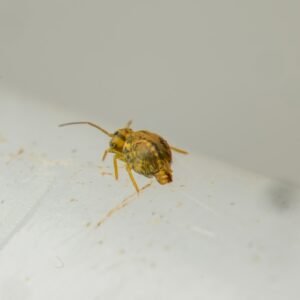
Belonging to the globular Sminthuridae family, Gold Rush springtails have a completely round, compact body form unlike any elongated species combined with a luminous warm golden-yellow colouration up to 3mm in size.
Unmistakable, photogenic, and genuinely rare in culture.
Perfect for display vivariums, collector enclosures, and planted litter-rich bioactive setups.
Raised in-house and shipped with a live arrival guarantee.
Select your quantity below.
Gold Rush Springtails Culture — Rare Golden Collector Species (Sminthurus viridis var.)
Everything about the Gold Rush Springtail defies what most keepers expect from a springtail.
Where common species are elongated, Gold Rush is round.
Where common species are white or muted, Gold Rush glows a warm, luminous golden-yellow.
Where common species vanish into the substrate, Gold Rush is found navigating leaf litter surfaces, low vegetation, and the upper layers of a well-built vivarium carrying its remarkable globular body through the enclosure like a tiny, living amber bead.
Sminthurus viridis var. — the Gold Rush Springtails belongs to the family Sminthuridae, one of the most visually distinctive springtail families in existence.
This is not simply a different colour. This is an entirely different body plan. And in a hobby where nearly every springtail culture looks identical at a glance, that difference is everything.
A Completely Different Body Form
Most collectors encounter elongated springtails first like Entomobrya, Lepidocyrtus, Tomocerus; slender, torpedo-shaped animals built for speed across substrate surfaces.
The Gold Rush Springtail belongs to a completely different world.
Members of the Sminthuridae family are globular in shape, found in surface litter layers, on vegetation, and in tropical forest canopies.
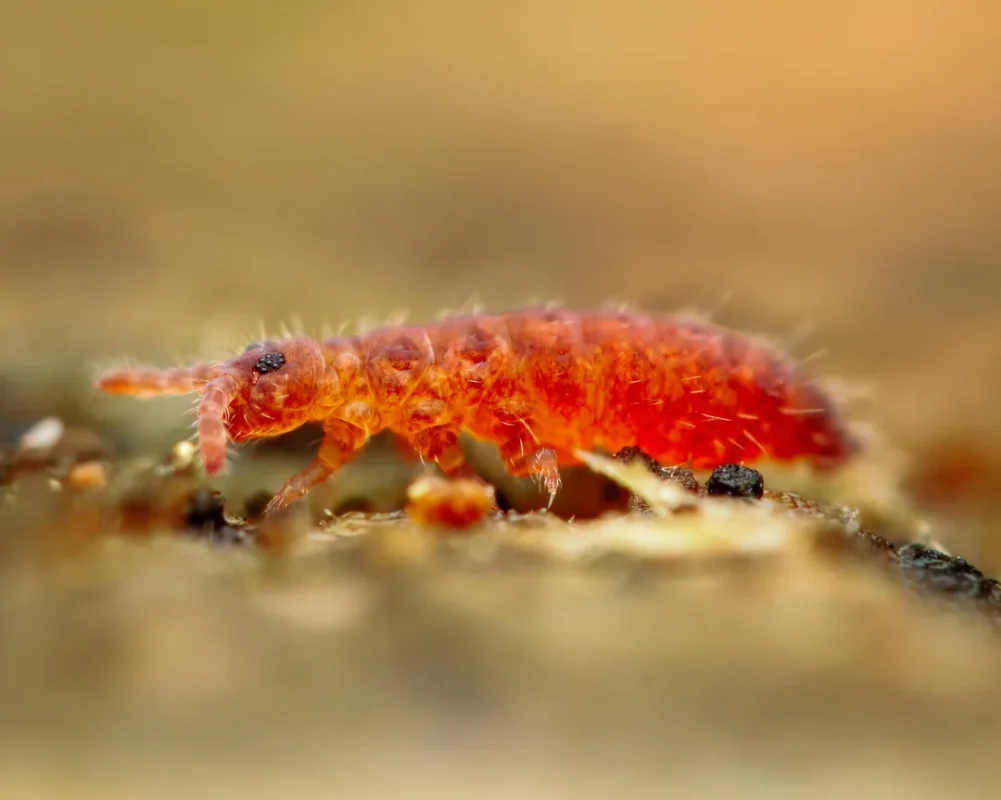
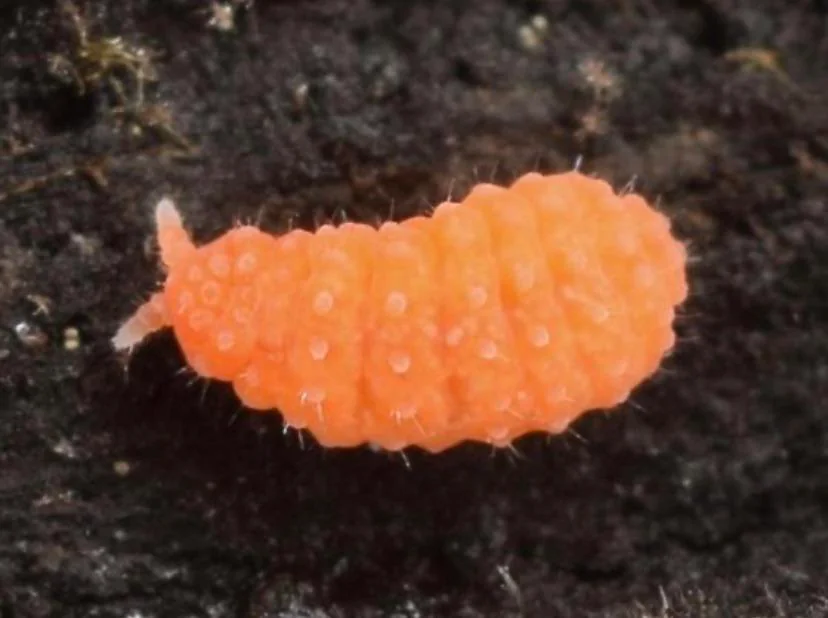
The result is an animal that looks less like a typical springtail and more like a miniature golden sphere with legs, compact, rotund, and utterly fascinating under magnification.
What makes the Gold Rush variant exceptional within this already unusual family:
- Warm golden-yellow colouration — a rich, luminous hue that immediately catches the eye against dark soil, moss, and leaf litter
- Globular Sminthurus body form — completely round and compact, unlike any elongated species in the hobby; instantly recognisable and conversation-worthy
- Up to 3mm body length — a fairly large species as Collembola go, making the golden colouration genuinely visible in a terrarium setting without magnification
- Active jumper — a well-developed furcula means the Gold Rush leaps actively if alarmed, adding a lively, dynamic energy to any enclosure
- Surface and litter-layer active — regularly found navigating vegetation surfaces, leaf litter, and the upper substrate, staying visible rather than buried
- Exceptionally rare in culture — Sminthurus viridis variants are seldom maintained as dedicated collector cultures, making this a genuine find
Why the Globular Form Matters for Collectors
For keepers who have spent time with elongated springtail species, encountering a Sminthurus for the first time is a genuinely startling experience.
The body plan is so fundamentally different that it barely registers as the same type of animal which is precisely what makes it so desirable as a collector species.
Under a loupe or macro lens, the Gold Rush Springtail is extraordinary.
The globular abdomen, distinctly segmented antennae, and golden colouration combine into one of the most photogenic microfauna subjects in the entire hobby.
For vivarium photographers, content creators, and detail-oriented collectors, this is a species that rewards close attention in a way few others can match.
Role in a Bioactive Enclosure
Despite their unusual appearance, Gold Rush Springtails perform the same essential detritivore functions as any quality springtail cleanup crew.
They are ecologically important in soil and litter ecosystems, feeding on:
- Mold, fungal hyphae, and surface biofilm
- Decaying leaf matter, rotting organic material, and detritus
- Bacteria, algae, and microbial films in the litter layer
- Tropical fish flakes and springtail food supplements
Their preference for surface litter and low vegetation layers means they actively patrol the most visible zones of your enclosure providing genuine cleanup function exactly where you can see them doing it.
Who Is This Species For?
- Serious collectors building a diverse, multi-species springtail collection who need a Sminthurus representative
- Macro photographers and content creators who want one of the most photogenic microfauna subjects in the hobby
- Naturalistic vivarium builders who appreciate the visual contrast of a globular golden animal against planted, litter-rich enclosures
- Advanced hobbyists ready to explore body forms and genera beyond the standard elongated species
- Display enclosure keepers who want every layer of their build to hold visual interest including the floor
Care Level: Intermediate. Gold Rush Springtails reward keepers who understand their habitat preferences and can maintain appropriate moisture and temperature conditions consistently.
Care & Housing Requirements
| Parameter | Recommended Range |
|---|---|
| Temperature | 74–76°F (23–24°C) |
| Humidity | Moderate to high — damp soil with leaf litter layer |
| Substrate | Moist organic soil with leaf litter and surface material |
| Diet | Tropical fish flakes, brewer’s yeast, springtail food mix |
| Enclosure | Secure-lidded container with moderate ventilation |
| Care Level | Intermediate |
Gold Rush Springtails thrive in warm, moderately humid conditions with a rich litter layer to navigate.
Maintain damp not waterlogged substrate and provide leaf litter, bark pieces, and organic surface material to replicate their natural habitat preferences.
What’s Included
Each culture contains approximately 50 Gold Rush springtails (Sminthurus viridis var.), including adults and juveniles, raised in-house at Springtails Culture and shipped with our live arrival guarantee.
Select your preferred quantity at checkout.
All cultures are active, counted by estimation, and packed with care.
The Ultimate Contrast Pairing
For maximum visual impact, pair Gold Rush Springtails with a dark-coloured or richly patterned isopod species.
The golden globular body of the Sminthurus against the contrasting tones of a quality isopod species creates one of the most visually dynamic cleanup crew combinations in the hobby functional, naturalistic, and genuinely stunning to observe.
They occupy complementary zones of the enclosure, with Gold Rush working the litter layer and surfaces while isopods handle deeper substrate decomposition.
Shipping & Live Arrival Guarantee
All active springtail cultures from Springtails Culture are carefully packed and monitored throughout transit.
We track destination temperatures and weather conditions before every shipment to ensure your Gold Rush cultures arrive alive, active, and ready to establish.
Please note: Quantities are estimated counts. Cultures may vary slightly in number. All sales are final — please review our Refund & Returns Policy before purchasing.
| Weight | 0.5 lbs |
|---|---|
| Species | Sminthurus viridis var. |
| Type | Rare & Exotic |
| Colour | Golden yellow |
| Body form | Globular |
| Difficulty | Intermediate |
| Temperature | 22–28°C |
| Humidity | High (70–90%) |
| Use | Collector / cleanup crew / display |
| Substrate | Fine moist soil or tropical mix |
| Live arrival | Guaranteed |
| Care sheet | Included |
| Stock level | Limited |
| quantity | 100 springtails, 1000 springtails, 150 springtails, 200 springtails, 250 springtails, 50 springtails, 500 springtails |
Be the first to review “Gold Rush Springtails | Sminthurus viridis var. Springtail Culture | Rare Golden Globular Collector Species”
Related products
Rare and Exotic Springtails
Temperate Springtails
Sinella curviseta – Pink Curved Springtail Culture — Planted Vivarium Bioactive Substrate Kit
Rare and Exotic Springtails
Rare and Exotic Springtails
Tropical Springtails
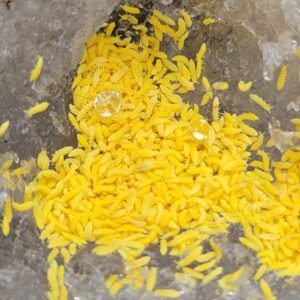
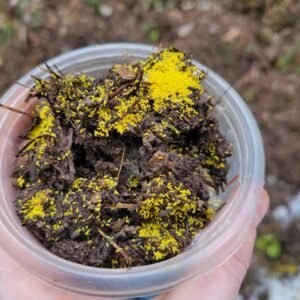
Collembola sp. Tropical Yellow Springtails — Prolific Tropical Bioactive Substrate Kit
Rare and Exotic Springtails
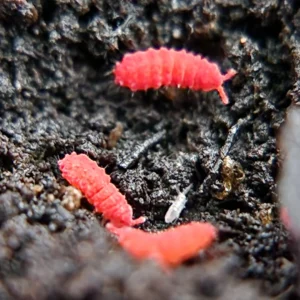
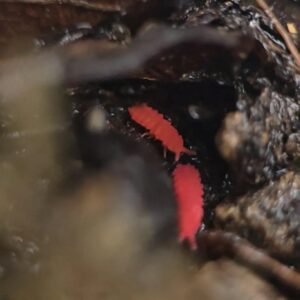
Thai Red Springtails | Lobella cf. sp. Thai Red Springtail Culture | Ultra Rare Collector Species
Rare and Exotic Springtails
Neanura growae – Florida Orange Springtail Culture — Native US Tropical Bioactive Substrate Kit
Temperate Springtails
Folsomia candida White Springtail Culture | Temperate Cleanup Crew for Terrariums & Bioactive Setups
Reviews
There are no reviews yet.