
Terrarium & Vivarium Care
Is Your Bioactive Terrarium Crashing? Signs and Fixes
Jul
Is Your Bioactive Terrarium Crashing? Warning Signs and Fixes
A “crash” is the term hobbyists use when a bioactive terrarium’s cleanup crew population collapses & mold takes over faster than it can be managed, waste stops being processed, and the ecosystem that was supposed to be self-sustaining suddenly isn’t. It’s one of the more stressful moments in the hobby, mainly because it’s often not obvious what actually caused it, or whether it’s recoverable at all.
This guide covers how to recognize a crash early, the actual causes behind most of them, and the specific steps to recover an enclosure rather than starting over from scratch.
Table of Contents
1. What “Crashing” Actually Means
A bioactive terrarium “crashing” refers to a collapse in the cleanup crew population; springtails, isopods, or both to the point where the enclosure’s mold, waste, and substrate balance is no longer being managed. It’s a population-level failure, not a single dramatic event, which is part of why it’s easy to miss until it’s already fairly advanced.
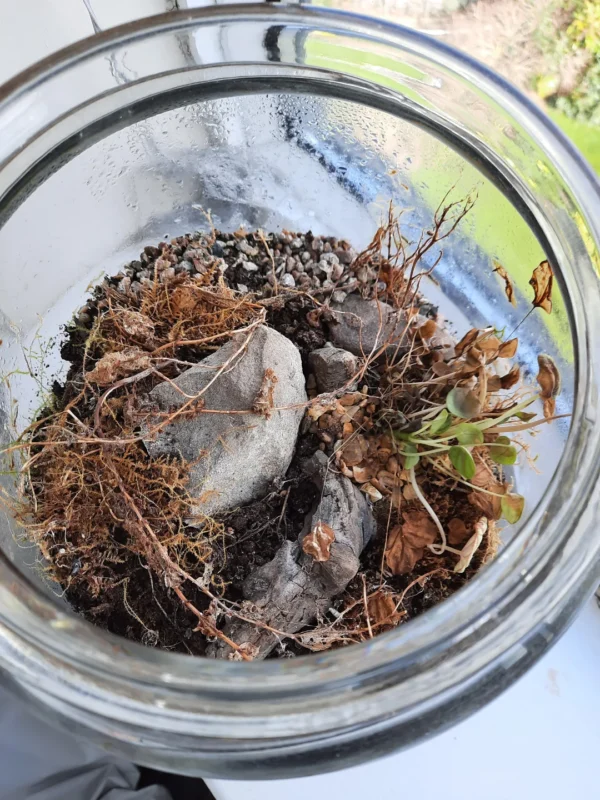
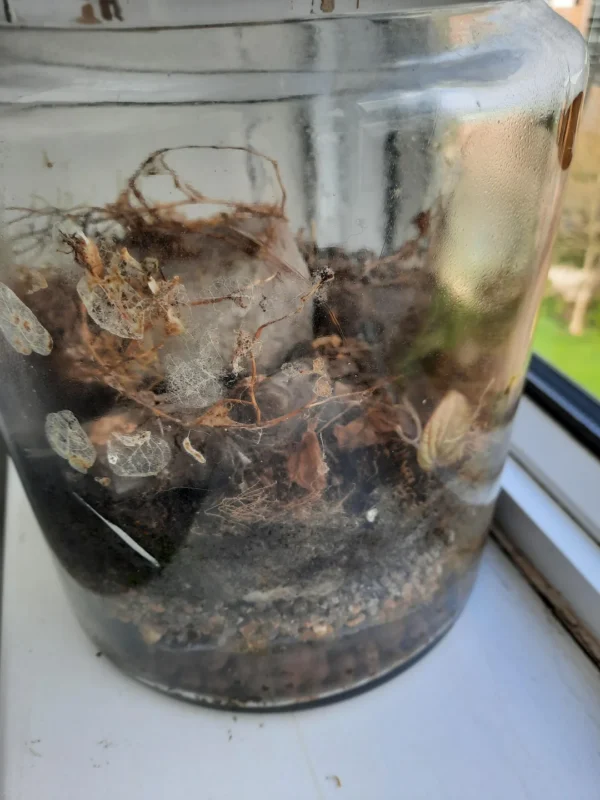
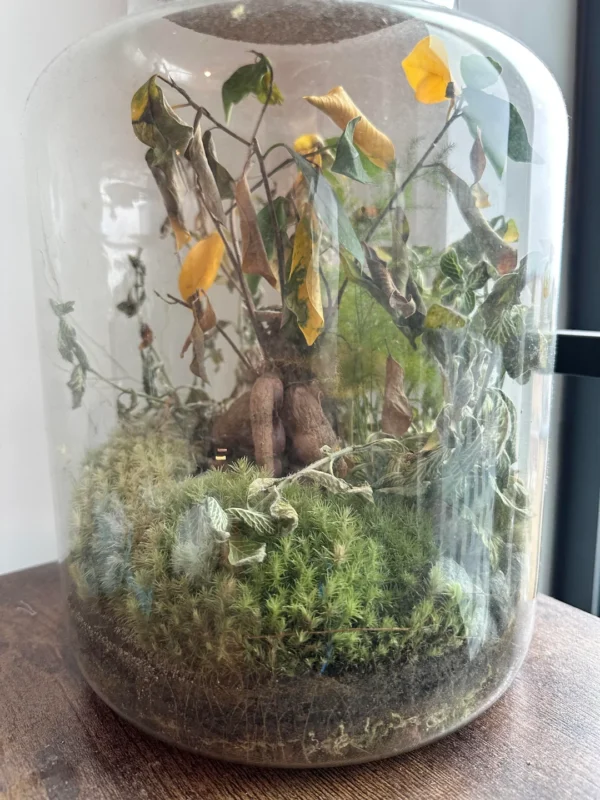
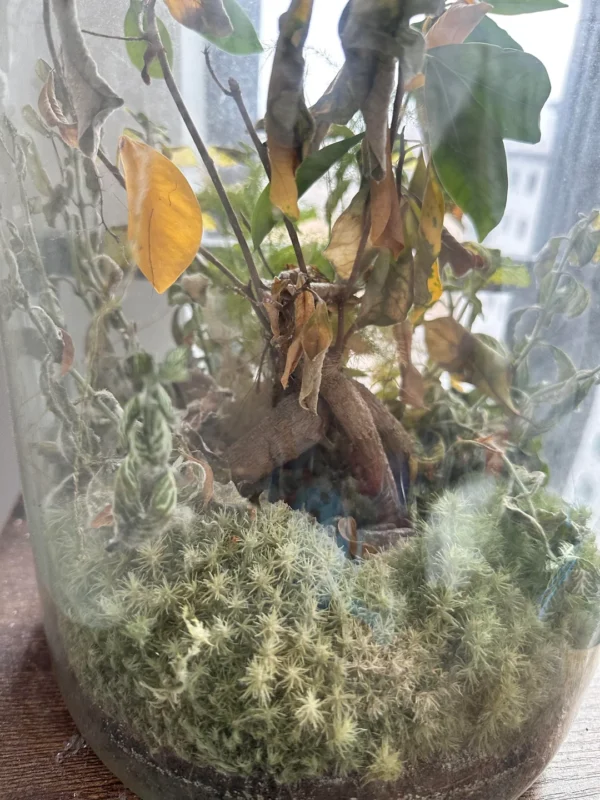
Importantly, a crash is about the ecosystem, not necessarily your reptile, amphibian, or invertebrate itself. Many enclosure animals tolerate a crashed cleanup crew without immediate harm, but a crash left unaddressed tends to compound that worsening mold, substrate odor, and eventually conditions that do affect the primary animal’s health.
2. Early Warning Signs (Before It’s a Full Crash)
Catching a decline early makes recovery far easier than waiting until the problem is severe. Watch for:
- A population that was visibly active and is now noticeably sparse, especially near food and moist areas where springtails typically cluster
- Mold returning and spreading faster than usual, despite a population that was previously keeping it in check. Here, see our mold troubleshooting guide for what “normal” mold activity looks like versus an actual imbalance
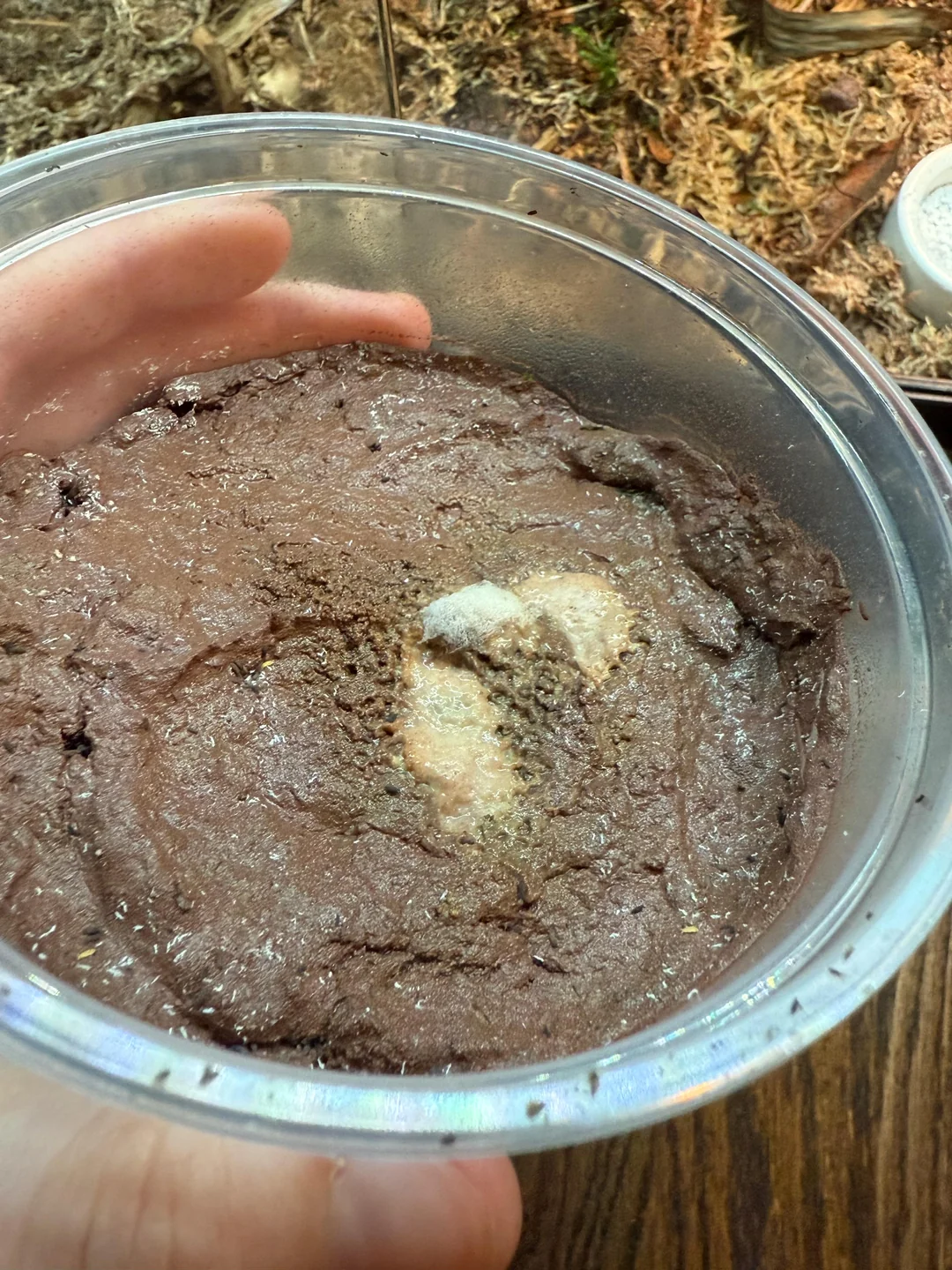
- Fungus gnats appearing or increasing, since gnat larvae compete with springtails for the same food source and often surge when the springtail population weakens. This is covered in our fungus gnats guide
- A sour, stagnant, or ammonia-like odor from the substrate, suggesting organic waste is accumulating faster than it’s being processed
- Visible waste or leftover food sitting unprocessed for several days, where it previously would have been broken down quickly
Any one of these on its own might just be a temporary fluctuation. Two or more together, especially over a sustained period, is a stronger signal that the population is genuinely declining rather than just having an off week.
3. The Real Causes Behind Most Crashes
Crashes rarely have a single dramatic cause and they’re usually the result of one or two conditions pushed outside a tolerable range for long enough that the population couldn’t recover on its own:
Moisture extremes. Substrate that’s either dried out completely or stayed oversaturated for an extended period is the single most common cause. Springtails and isopods both need consistent, moderate moisture with extended time on either end of that range causes population decline.
Temperature swings or extremes. A heater malfunction, an unusually hot week without adjustment, or an enclosure placed somewhere with more temperature fluctuation than realized (near a window, vent, or exterior wall) can stress a population past the point of recovery, even if conditions look normal again by the time you notice the decline.
Overfeeding. Excess food rotting in the substrate can foul the medium faster than the population can process it, creating a feedback loop where the population declines from the fouled conditions rather than the feeding stimulating growth as intended.
An undersized population relative to bioload. As covered in our sizing guide, a population that was too small for the enclosure’s actual waste output can be gradually overwhelmed rather than crashing suddenly and this often looks like a slow decline rather than an obvious event.
Chemical exposure. Certain cleaning products, some medications administered in the enclosure, or even heavily chlorinated water used consistently can harm a sensitive population over time.
Starting a species poorly matched to the enclosure’s conditions. A tropical species in a cooler, drier setup (or vice versa) is working against its natural tolerance range from day one, making a gradual decline more likely even without an acute triggering event.
4. Is It Recoverable, or Do You Need to Restart?
Most crashes are recoverable without tearing down the enclosure, provided the underlying cause gets corrected alongside reseeding. A few signals help you gauge severity:
Likely recoverable with reseeding: the population has declined or thinned significantly, but the substrate itself isn’t fundamentally compromised (no persistent foul odor, no waterlogged or bone-dry substrate throughout), and you can identify a clear, correctable cause.
Consider a more thorough substrate refresh: if the substrate has been saturated or fouled for an extended period, simply reseeding on top of compromised substrate often leads to the same decline repeating. Refreshing or partially replacing the substrate alongside reseeding gives the new population a genuinely better starting environment.
A full teardown is rarely necessary, even in more severe cases. it’s usually a last resort reserved for substrate that’s been fouled for a long period with no correction, rather than the default response to any decline.
5. Step-by-Step: Recovering a Crashing Terrarium
- Identify the likely cause first, using Section 3 as a checklist, rather than reseeding immediately. Reseeding without correcting the underlying issue tends to produce the same decline again.
- Correct moisture and temperature conditions back into an appropriate range for your species, and give it a few days to stabilize before reseeding.
- Remove any obviously fouled material; heavily rotted food, waterlogged substrate pockets without necessarily replacing the entire substrate, unless conditions were severe enough to warrant it per Section 4.
- Reseed with a fresh culture, sized generously. A declining or crashed enclosure behaves similarly to one with an existing mold backlog and a larger or already-established culture recovers faster than a small starter batch left to grow into the existing imbalance.
- Hold off on heavy feeding during recovery. Let the population reestablish before resuming a normal feeding schedule, since overfeeding a still-recovering population risks repeating the same fouling issue.
- Monitor closely for 2–3 weeks, watching for the same early warning signs from Section 2, to confirm the population is genuinely reestablishing rather than declining again under the same conditions.
6. Preventing Future Crashes
- Check moisture levels on a consistent schedule rather than only when something looks visibly wrong as most crashes stem from a gradual drift rather than a sudden change.
- Monitor temperature more carefully than most keepers initially do, especially in enclosures placed near windows, vents, or exterior walls where ambient conditions fluctuate more than the room average suggests.
- Match species to conditions from the start, using the guidance in Section 3, a poorly matched species is working against a decline from day one, even under otherwise reasonable care.
- Size your culture appropriately to your enclosure’s bioload, per our sizing guide, rather than assuming any starter culture will scale to fit.
- Keep a backup culture growing separately, as recommended in our dart frog feeding guide and this isn’t just useful for feeder populations, it’s a practical insurance policy for any enclosure, giving you an immediate source to reseed from if the primary population ever declines.
7. Frequently Asked Questions
How do I know if my bioactive terrarium is crashing? Common signs include a springtail or isopod population that’s visibly thinned out, mold returning and spreading faster than before, an increase in fungus gnats, a sour or ammonia-like substrate odor, and waste or leftover food sitting unprocessed for several days.
What causes a springtail culture to crash? The most common causes are extended moisture extremes (too wet or too dry), temperature swings, overfeeding leading to fouled substrate, an undersized population relative to the enclosure’s waste output, and chemical exposure from cleaning products or heavily treated water.
Can a crashed bioactive terrarium be recovered without starting over? Yes, in most cases. Identifying and correcting the underlying cause, removing any obviously fouled material, and reseeding with a generously sized culture typically recovers an enclosure without a full substrate teardown.
How long does it take to recover a crashed terrarium? Most recoveries take two to three weeks to show clear signs of a reestablishing population, similar to the timeline for seeding a new enclosure or resolving an existing mold problem.
Should I remove all the substrate if my terrarium crashes? Not usually. A full substrate replacement is generally only necessary if the substrate has been saturated or fouled for an extended period without correction. In most cases, correcting the underlying condition and removing obviously fouled material is sufficient before reseeding.
Will reseeding fail if I don’t fix the original problem? Very likely, yes. A fresh culture added to the same conditions that caused the original decline tends to face the same pressures and can decline again. Correcting moisture, temperature, or feeding issues before or alongside reseeding is what actually prevents a repeat crash.
A bioactive terrarium crash is rarely as catastrophic as it feels in the moment and in most cases come down to one correctable condition that drifted too far for too long, not a fundamental failure of the setup. Identify the cause, correct it, and reseed generously rather than starting from scratch. Browse our live springtail cultures for recovery-sized options, or revisit our sizing guide to make sure your reseeded population matches what your enclosure actually needs.
